give me a daisy

~ ~ ~ ~ read ~ write ~ look ~ listen ~ create

The kindness of strangers

Kindness

Kindness (Photo credit: -RejiK)

We expect kindness from our friends and family, whether or not we always receive it. And if we aren’t always kind to those same friends and family members, we usually have the good sense to feel guilty. Kindness doesn’t cost a lot to give, but the cost for its absence can be very high. Anyone who’s paying any attention can see that, as a species, we are not particularly kind. We divide ourselves into tribes—family, neighborhood, background, nationality, race, religion, region, age, personal interest, political affiliation, and on and on—and all too easily dismiss or revile those who are not in one of our tribes.

Whoever you are, I have always depended on the kindness of strangers.

–Blanch DuBois, A Streetcar Named Desire, Tennessee Williams

Last week, I came across a Ted Talk by Hannah Brencher who has started a movement to be kind to strangers that is spreading all over the globe. The idea came to her when she hit a very low point in her life living in New York City after graduating from college. To help herself break out of her own depression, she wrote anonymous love letters—dozens of them—and left them all over the city for strangers to find.

And now The World Needs More Love Letters coordinates the exchange of love letters between strangers all over the world. You can sign up to be notified to write a letter once a month—or to request a letter for someone you know. You can read the stories of some of the strangers who have found love letters in cafes, on college campuses, taped to their vehicles, or stuck inside the pages of library books.

If you wrote a love letter to someone whose face you wouldn’t see when they read it, who wouldn’t know it was you who had sent it, and who would never be able to tell you how it affected them—would you still do it?

I have never been a big fan of Christmas and the insanity leading up to it. And I know that the holidays can be a depressing time for lots of people. So this year, I’m going to write a love letter to a stranger each day during the month of December and put it where someone will be sure to find it. Maybe someone with whom I’d disagree politically. Maybe someone whose religious beliefs would offend me. Maybe someone I’d never want to hang out with. But still, a member of my species.

Thank you, Hannah, for your kindness to so many strangers. What a wonderful way to make a difference!

all we have here is sky

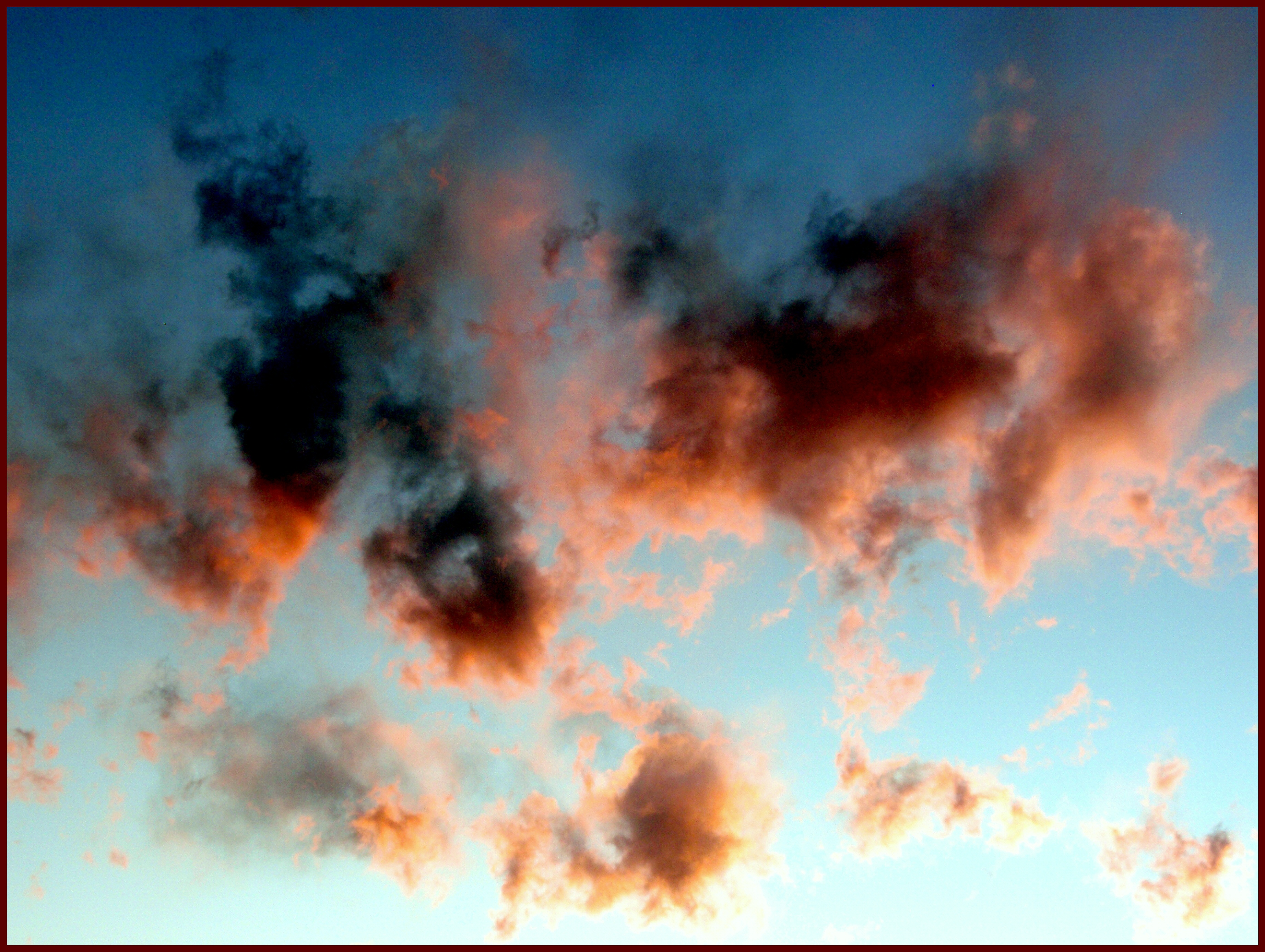
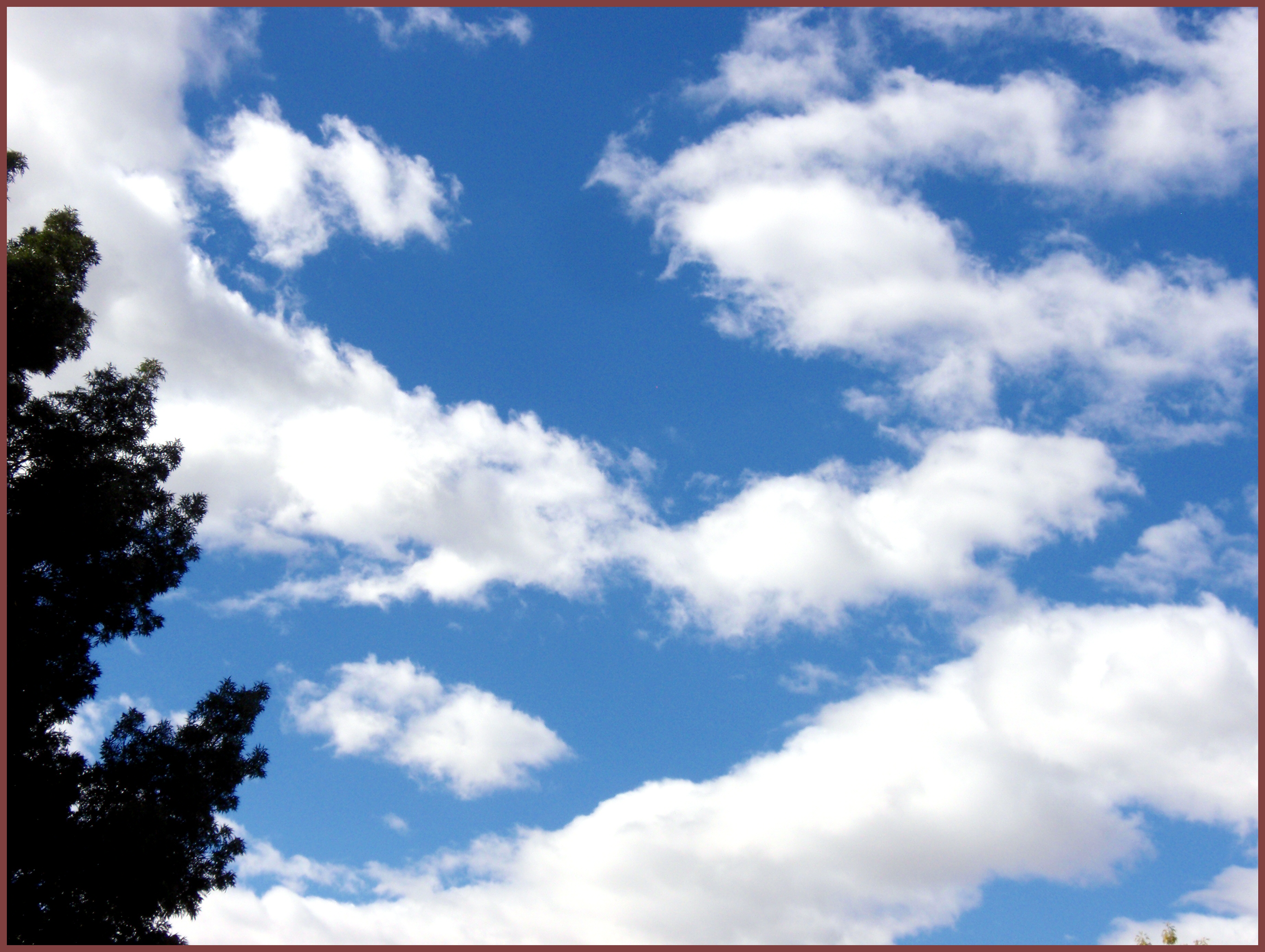
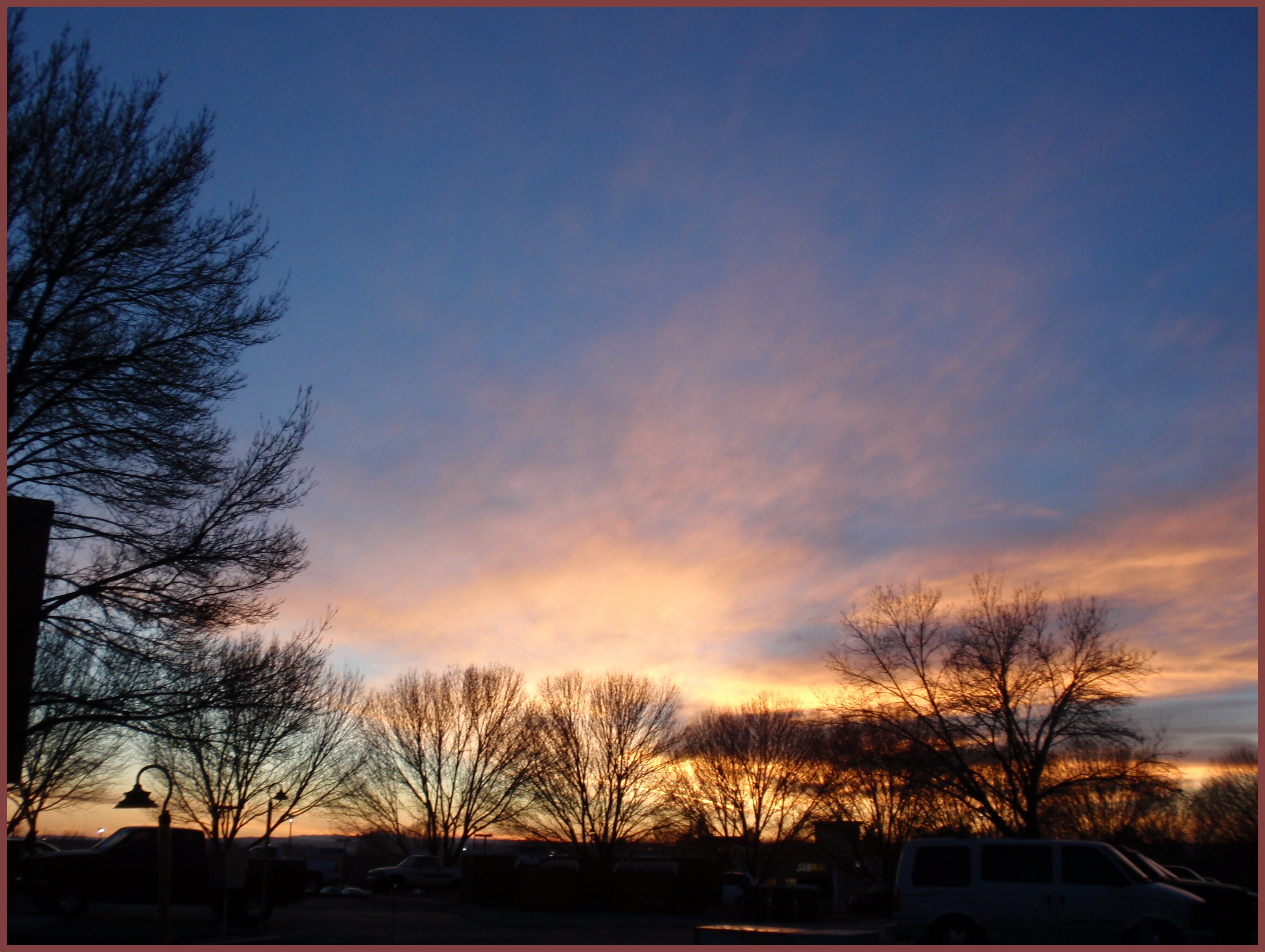
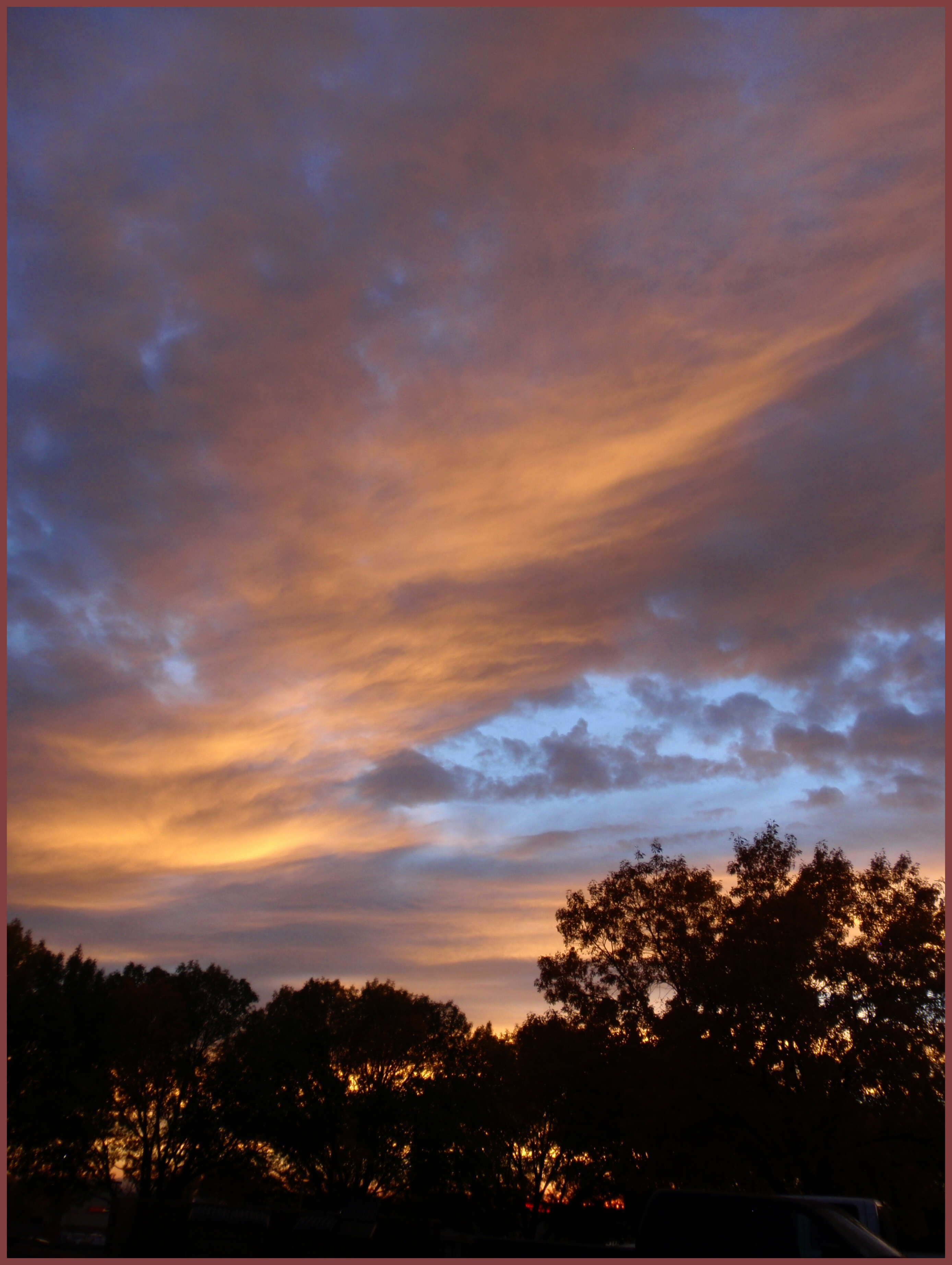
New Mexico is called The Land of Enchantment. And it truly is. I never tire of the changing light and color and cloud configurations. I keep my camera near the front door because all I have to do is step outside to get a hit of wonder.

This is the sky at sunset a couple of weeks ago:

Some zigzag clouds in October:

The liquid amber tree across the street:

The sun setting behind bare trees:

Another one. (Couldn’t decide which photo to use.)

Early November sky:

The pale moon in October, not quite full:

I feel fortunate to live in this place. Fortunate to have a camera. And fortunate to have a place to share these pictures. I also feel fortunate to have come across this loopy but totally irresistible video of Jane Siberry. Who remembers this?

brown haired girl (a short story)

Memory is incomplete experience.
— J. Krishnamurti

A pleasurable warmth coursed through me from chest to belly and all the way down my legs to my toes. I’d been dreaming something good. The details had all vanished leaving behind this vapor trail of contentment. I’d read that if you keep your body in the same position after waking up your dream might come back to you. I tried feigning sleep, but Delilah batted at my nose with the tips of her claws to let me know she meant business. I took her paw in my hand and stroked her soft fur with my thumb. “Good kitty,” I whispered. Not about to settle for sweet talk, she yanked her paw from my grasp and let out a piercing meow. No question who was in charge here.

I opened my eyes to confront her steely green orbs less than three inches from my face. “All right, baby. Time to rise and shine. Or rise, anyway.” As soon as I pushed the quilted purple coverlet aside, Delilah jumped down from the bed and pranced out of the room, her black and white tail pointed skyward. I pushed my feet into slippers, wincing at the sight of my varicose veins. I used to have great legs, a hiker’s legs, strong and smooth and muscular; they had carried me up the sides of more than a few mountains back when. Now they looked and felt like they belonged to someone else, less like legs than sticks of wood.

Delilah called impatiently from the kitchen, so I stood up and ordered my feet to get moving. As I passed through the doorway, the memory flooded me so abruptly and with such Technicolor clarity I reached for the wall to steady myself.

Sam and I are in his green VW bug, heading out of town on the last weekend of October. We have food: yellow Delicious apples, cheese, and bread brought by me; wine, dark chocolate truffles—my favorite—and the ever-present red plaid thermos of black coffee brought by him. The sky is amazingly, brilliantly blue, with fairytale puffs of pure white clouds scudding across. The air feels crisp and clean, as if rain-washed.

We pass the bait shop with its signs hand-lettered on the windows in blue and white paint offering live bait, boat repair, fishing licenses, and cold drinks. Half a dozen teenaged boys in ripped jeans and Rolling Stones T-shirts are hanging around the entrance to the Mom and Pop store next door, smoking and shoving each other around, trying to kill some of the time they might someday wish they could get back. On the other side of the road, sandwiched between a couple of shabby used car dealerships, there’s the no-name café with its rectangular sign atop a tall pole towering over everything in the area and sporting a single word: “Eat.” A battered gray pick-up, probably belonging to the owner, is the only vehicle parked in the gravel lot. Sam and I keep threatening to go inside and order something to find out whether the food is edible and if the place has an actual name.

Sam says, “Hey, Annie,” in that fake casual tone of his, “could you root out one of those truffles for me?”

I stare at the round glasses resting on the bridge of his freckled nose, at his sculpted cheekbones and thatch of auburn hair. He looks sort of like an Irish John Lennon. “Ha, ha,” I say, not giving him the satisfaction of a smile. “How long were you saving that one up? Did you bring those truffles just so you could get off a one-liner?”

Sam grins. He runs his fingers through my hair, which falls around my shoulders in heavy brown waves. My chest constricts.

“I brought them because I love watching you eat them. You look like you’re about to have an orgasm.”

I hate having him see how embarrassed this makes me. I’m 19, but Sam is 21, and he seems much older and more experienced. I tell him to pay attention to the road, but he laughs and starts singing can’t take my eyes off of you…you’re just too good to be true…

As Delilah’s meows approached the level of caterwauling, I proceeded toward the kitchen humming the song since I couldn’t remember the rest of the words. Delilah made small circles in front of the door, the feline equivalent of pacing.

“OK, OK. You know I’m not as fast as I used to be. Someday you’ll be old and stiff, too. See how you like it when it happens to you.” I reached down to scratch the top of her head, but she gave me a dirty look and leaned away. I held open the door to the backyard, and she stepped out primly onto the top concrete step, surveying her territory before scampering into the yard. She was damn nimble for a 13-year-old cat. If you converted her age to human years, she was older than me, and frankly I was jealous of her agility.

I followed her down the steps and felt the sun on my bare arms. It was warm, but not yet hot, and the sky was cloudless. We needed rain, but I—and my bones—loved these dry, sunny days best. Delilah sniffed around the fence skirting the flowerbed, checking for traces of nighttime visitors. The lawn was green, thanks to the sprinkler system my son-in-law had installed, and all my flowers were blooming: the marigolds and zinnias, as well as the pink Queen Elizabeth roses and the sunflowers. I’d have to come out later with a bowl to pick some raspberries; the bushes bordering the fence were lush with fat red jewels.

Back in the kitchen, I heated water in the kettle, tossed some ground coffee into a brown paper cone, and bent close to inhale the scent. I’m still a coffee addict; it’s an old habit, one I picked up from Sam, actually.

He turns onto a dirt road taking us deep into the Michigan woods. We’re both quiet now, partly because of the quiet outside, but more, I think, because the trees have stunned us into silence. The leaves are so intensely gaudy with their red/gold and burnt orange colors that when the breeze ruffles them and sends handfuls whirling through the air, the countryside looks like it’s going up in flames. But you can tell fall is coming to an end. By next weekend, or the one after, most of the leaves will be gone, leaving the branches winter-bare.

Sam pulls off the road near a picnic table. We’ve never encountered anyone else here, so we think of it as our private retreat. I relax against the seat and breathe everything in. The air smells of decaying leaves and distant smoke. I know I will never forget this smell. Sam puts his arm around me, pulling me against him. His jacket brushes my cheek and my hair falls in front of my face. I brush it away and he kisses me long and hard, with his eyes open, staring into mine.

“Want a truffle?” he says, and we both crack up.

I slap at him lightly and push him away. “Maybe later.” I raise my eyebrows and attempt a suggestive look before digging into my pocket for a rubber band so I can pull my hair back into a ponytail. We get out of the car and head for the lake about a quarter of a mile away.

The sound of a train whistle made me shiver, but it was only the tea kettle. I turned off the heat and poured boiling water over the grounds. While the coffee brewed, I went to my bedroom to get dressed. These days I avoided looking at myself if I didn’t have to, but now I stood in front of the mirror as I slipped out of my nightgown, let it fall on the floor, and stepped into a worn pair of size eight jeans. Although I hate bras I usually succumbed to convention, but this morning I said the heck with it and pulled a T-shirt over my bare breasts. My nipples poked against the thin yellow cotton. I combed my fingers through my hair, which is thinner and gray now, but still comes down past my shoulders and still has some wave in it. I reached into my pocket for one of those coated hair bands that go on and off so much easier than plain rubber bands do.

Sam and I hike to the lake and take the trail up into the hills. As we climb, we talk about all the places we’re going to hike next year in different parts of Michigan, maybe the Upper Peninsula, and in other states later on, when we’re both finished with school. He wants to try Colorado; I’m dreaming of New England. We intend to travel a lot once we can afford it, so we spend a lot of time pouring over guidebooks for India and Greece and Spain, planning elaborate fantasy hikes.

When we get back to the car, we transfer everything from the back seat over to the picnic table and spread it out on top of a brown and white checked cloth. I grab an apple, sit down, and swing my legs over the seat of the picnic table. When I bite into the apple I spray juice everywhere.

Sam laughs and sticks his hand out. “Hey, be careful with that thing. It appears to be loaded.”

I make a face at him and laugh, too, trying not to choke or spit out apple bits. Sam cuts hunks of bread and slices of Swiss cheese and arranges them on paper plates while I unwrap the box of truffles, trying not to drool all over them. He opens the wine bottle with his Swiss Army knife. It’s inexpensive Cabernet, but at least it isn’t screw-top. He fills two paper cups halfway and hands one to me. I switch the apple to my other hand, wipe my palm on my jeans, and take the cup from him

“To us,” he says, winking and giving me a crooked, sexy smile.

My heart is so full I can hardly stand it. “To us,” I whisper back. Our toast feels ceremonial, like we’re making a do-or-die promise to each other, a vow, serious and holy. The forest, too, seems alert to the subtle change in atmosphere. And me, I’m wide open and ready, on the brink of the rest of my life, my beautiful life with Sam, who is strong and smart and funny and everything I will ever want or need.

Three sharp raps at the back door preceded the sound of Sandra’s voice. “Mom? You in here?”

“Coming!” I headed back to the kitchen where I found Delilah winding herself around Sandra’s legs. “You,” I said to the cat. “Back so soon?”

Sandra glanced at my chest before looking me in the eye. “I was on my way home from swimming and thought I’d stop by.”

“How nice. Would you like some coffee?” I lifted the plastic cone and offered her the mug of brewed coffee, but she shook her head.

“Not yours. I’ll fix my own.” She set her purse on the counter and carried the tea kettle to the sink to refill it. “Have you eaten breakfast?”

Sandra had recently taken to stopping by unannounced either to nag me or to see if I’m showing signs of losing my marbles, I’m not sure which.

“Nope.” I took a sip of black coffee, sighing as the caffeine kicked in. “Not hungry yet.”

“Mom, you should eat something in the morning. Even if it’s just toast.”

“You’re right. I’ll pick some raspberries in a minute. You can take some home with you for the kids.” I pulled out a chair and sat down at the oak table, watching my dark-haired older daughter carefully measure coffee into a fresh paper cone. She took after Philip, her father; practical people, both were neat, cautious, and meticulous, always busy-busy-busy, darting about, weaving their webs of safety and security around themselves and everyone close to them. Time and repetition had worn down my resistance to their ministrations.

Resting my elbows on the table, I gazed out the kitchen window past the cloud of peonies blooming against the fence on this side of the yard, toward the pastel haze of the eastern mountains. Sam. I hadn’t let myself think of him in years, allowing those memories to fade as the color of my hair has faded, to grow as brittle as my old bones. But what harm was there in indulging myself now, after all this time?

“You know what would go great with this coffee?” I said. “One of those dark chocolate truffles. With an Amaretto center. No, not Amaretto. Gran Marnier.” I could almost taste it. “Doesn’t that sound absolutely…um, really good?” I’d almost said “orgasmic.”

My daughter whirled around to face me. “What are you talking about? Mom, you’re not eating candy for breakfast, are you?”

I could just hear Sandra’s outraged report to her sister, Christine: “She’s eating chocolates for breakfast. Chocolates filled with liquor!” Chris would correct her: “It’s not liquor; it’s liqueur”—completely missing Sandra’s point and making a distinction that would be lost on her sister.

I stared into the dark steaming mug on the table and felt my lips twist into the smile of my younger self, slim-hipped and strong-legged; a little shy, but game, and impatient for the adventure to unfold. I had been so confident in Sam’s and my love, so certain of what the future held. There was so much I hadn’t known, so many things I couldn’t possibly have foreseen.

The cat curled up next to my bare feet purring, reminding me of who I was here and now—and where. But when I closed my eyes, the spirit of that eager young girl slipped into me, transporting me back to Michigan on a late-fall day amid flaming leaves and hushed, crystal-clear air, where I was poised—or maybe not exactly poised, but there—on the brink, with my whole life, for better and worse, still all out in front of me.

Maybe that girl would have been as scandalized as Sandra was at the idea of eating chocolate truffles for breakfast. But she would have been willing to do it. At least once.

short story envy

Not only is November National Novel Writing Month (NaNoWriMo) and Poem A Day (PAD) month, this week (12th to 18th) in November happens to be National Short Story Week (no acronym) in the UK. But since the internet is a global village, we can all partake in the celebration.

The short story — how modest in bearing! How unassuming in manner! It sits there quietly, eyes lowered, almost as if trying not to be noticed. And if it should somehow attract your attention, it says quickly, in a brave little self-deprecating voice alive to all the possibilities of disappointment: “I’m not a novel, you know. Not even a short one. If that’s what you’re looking for, you don’t want me.”

Steven Millhauser, The Ambition of the Short Story, New York Times 10/03/08

I really envy people who are able to write good short stories. I’ve tried my hand at writing them several times over the years (or, ahem, decades), but it’s just not something I’m good at. So I generally stick to reading them.*

Some of my favorite sources for short stories are:

Glimmer Train

I’ve been a big fan of Glimmer Train for years. They publish a quarterly short story magazine that is probably the one subscription I wouldn’t give up no matter what. For writers, they also publish Writers Ask, a 16-page quarterly full of info and interviews with published writers. And you can sign up for their online newsletter. I subscribe to everything!

Narrative Magazine

Narrative also has print and online publications. The website publishes fiction, poetry, nonfiction, and interviews. Most are free. Lots of good quality material. Sign up to receive notifications via email.

One Story

One Story mails a single short story to subscribers “about every three weeks.” The magazine is pocket sized so you can carry it around with you. I have taken issues of One Story to the dentist’s office, the eye clinic, and to Jiffy Lube. Occasionally there’s one that doesn’t appeal to me. But the overall quality is excellent.

Tin House

Tin House is a high-quality literary quarterly that publishes all kinds of stuff: fiction, nonfiction, poetry, book reviews, etc. They also publish books and hold writers workshops in the summer.

I also like the short stories published in The New Yorker.

And Daily Lit, which I just got started with, has 122 short stories among its offerings. I subscribed to receive the story Hell-Heaven by Jhumpa Lahiri in 10 installments via email.

What are your favorite sources for short stories?

*However, just so you’re warned, I plan to post one of my few completed short stories next time.

don’t you want to be Maria Popova?

Maria Popova

How about Curator of Interestingness, then? So cool! And I’m a little jealous. Even if Popova made up the title and gave it to herself, take a look through her website (Brain Pickings) and I think you’ll agree the title is pretty accurate. It’s a website you can get lost in, full of all kinds of interesting (of course) and creativity related information, material, and links.

My favorite part of Brain Pickings so far is literary jukebox, which features a “quote from a favorite book, thematically matched with a song.” Some of the quotes are long; others are quite short. I like the pairing of this short quote about change from Henry Miller with the song “Change is Hard,” by She and Him.

You can sign up to receive Brain Pickings’ free weekly newsletter. One recent issue features an article about why writers write, composed of excerpts from an essay by Joy Williams. Nicely timed with National Novel Writing Month. The current issue includes a piece titled What Will Survive of Us Is Love: Helen Dunmore’s 9 Rules of Writing. Rule No. 1: Finish the day’s writing when you still want to continue.

Popova was named one of the top 100 creative people in business in 2012 by Fast Company. She also writes for Wired UK, The Atlantic, and several other publications and edits Explore, “a discovery engine for meaningful knowledge, fueled by cross-disciplinary curiosity.”

The Brain Pickings and Explore websites each have an entirely different look and feel, but both are appealing and very nicely designed.

Sadly, although I would love to be Maria Popova and to have invented a career as Curator of Interestingness, I would not love to take on her daily work schedule, which is a real bear. So I’ll continue stumbling around in the world of interestingness, keep tuning in to the literary jukebox, and admire Ms. Popova from afar. Or from Twitter or Facebook. Maybe both.

Who would you like to be?

On the Road…to writing 50,000 words

Jack Kerouac Reads On the Road

Jack Kerouac Reads On the Road (Photo credit: Wikipedia)

I don’t think Jack Kerouac was actually the inspiration for National Novel Writing Month. But On the Road may be the first—or at least the best-known—NaNoWriMo-type success story.

It was Kerouac’s second novel, published in 1957. But by the time he began writing the book in 1951, he had already developed the habit of setting a daily word count for himself. He wrote the first draft of On the Road in three weeks (not in November, but in April).

The man was his own intellectual personal trainer, standing over himself with a shrill whistle as he ground out the paragraphs, pored through Dostoyevsky, analyzed ”Hamlet” line by line and typed up his novel’s 1,100 page manuscript. To quantify his progress in this last task, Kerouac devised a numerical ”batting average” that he recalculated as he went. ”Did 17 pages, batting .329….”

Walter Kirn, reviewing Windblown World: The Journals of Jack Kerouac 1947-1954, in the New York Times 10/10/04

That could be viewed as either inspiring or intimidating to current NaNoWriMo novelists. But my own experience with NaNoWriMo was that standing over myself, metaphorically speaking, and relentlessly holding myself to a daily count of 1,667 words was what made me succeed at reaching the 50,000-word goal. I used an index card system to track my chapter word counts and my daily word counts. I confess to having done some light editing as I went, so I wrote my numbers in pencil and kept an eraser handy.

If you’ve put your writing self on the line by committing to write 50,000 words this year, congratulations: you’re a third of the way—and hopefully about 16,670 words—closer.

Just Do It!

Nothing behind me, everything ahead of me, as is ever so on the road.

Jack Kerouac, On the Road

reggae in Hopiland

Panoramic view of Hopi Reservation from Arizon...

I’ve been a huge Bob Marley fan for quite a while, which is why I made the protagonist of my novel-in-progress INDIAN SAM an even bigger Marley fan. The novel is set in the Southwest, and while I was doing some research a couple of years ago, I discovered a musical convergence I hadn’t expected to find.

It turns out that the Hopi Indians embraced Bob Marley back in the 1970s and are still huge reggae fans.

They sing about oppression, and we feel that here. And they sing about peace and unity in the world, which is what our religion teaches us. But it’s the beat, too. It has the same feel as our tribal drumming.

Jennifer Joseph, Hopi painter and graphic artist

Marley reportedly wanted to visit the Hopi reservation in Arizona, but he died before he had the chance to do it. Freddie McGregor, unofficially the “Ambassador of Reggae,” was the first reggae musician to play a gig on the reservation. He returned to perform there at least five times.

In the 20 years preceding 2003, there were nearly 60 reggae concerts on the reservation featuring groups such as Black Uhuru, Third World, Burning Spear, and Steel Pulse.

Eventually a homegrown reggae artist emerged in the form of Hopi/Diné singer Casper Loma-Da-Wa, who listened to reggae on the radio while helping his grandfather in their cornfields when he was growing up. He has released several CDs, including Honor the People, which has a lot of songs I really like, including Ideal, Last Train (to Hopiland), Love Life, and this one, Brother Leonard (Set Him Free) dedicated to Leonard Peltier.

In this video produced by the Culture Collective, Casper Loma-Da-Wa talks about his music:

The Hopi reservation is just about as far out of the way as you can get, so it would have been likelier for the Hopi to have missed the emergence of reggae music altogether. That reggae not only made it onto the reservation, but connected in such a deep and profound way with the Hopi audience who received it is pretty amazing. I think Bob Marley would be gratified to know how much impact his music continues to have in some of the most unexpected places.

Related article:

a collaborative adventure

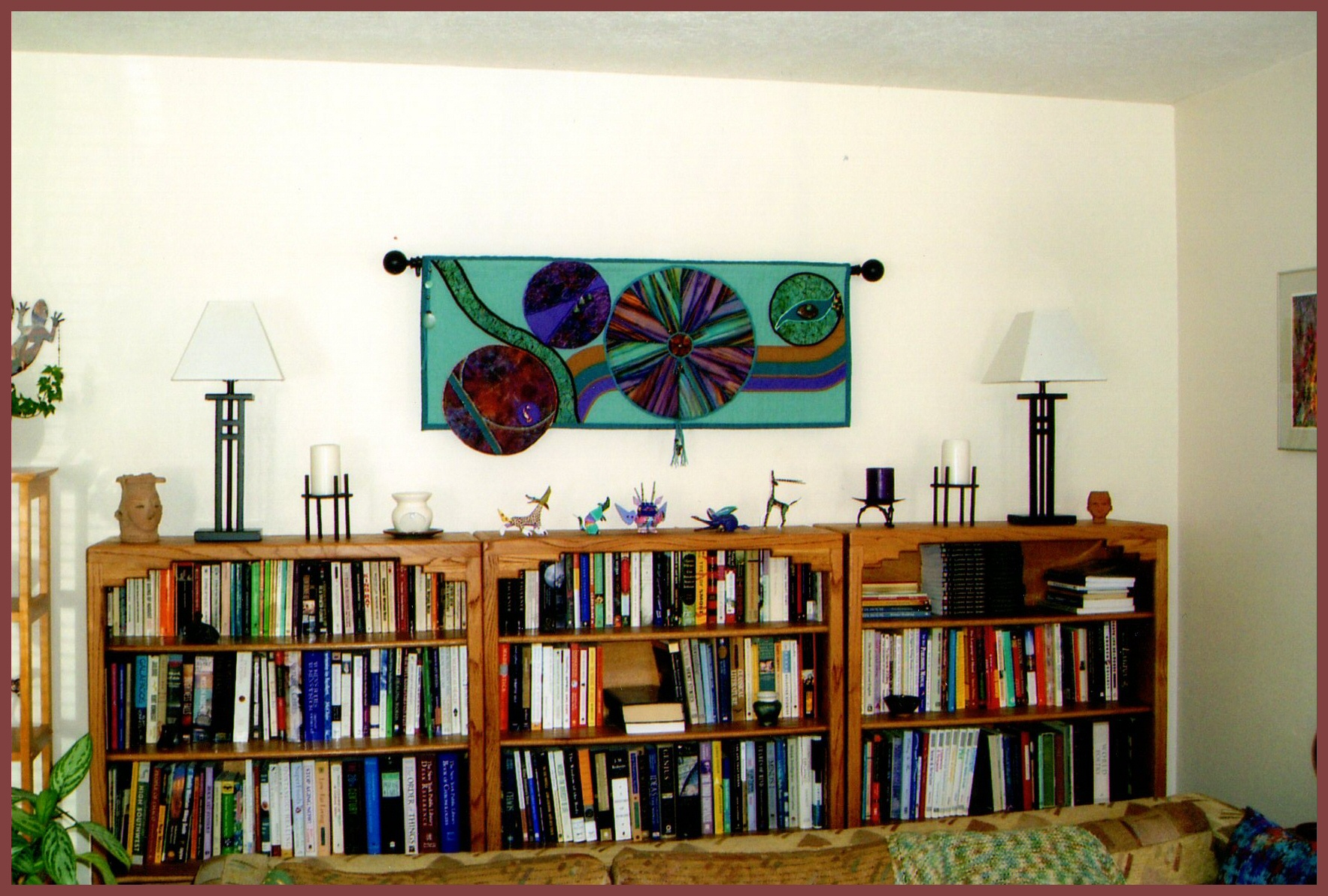
This is a guest post by my friend Sylvia Davis, a very creative quilt artist. She graciously agreed to undertake making something to hang on a wall in my living room. I love the resulting piece.

A group of friends was at my house for dinner, and as often happens, we all gravitated to my workroom to discuss my current quilting projects. Silent amongst them stood Joycelyn, who was looking thoughtfully at each of the wall hangings in the room. These were predominantly modern abstract stained glass-like patterns in bright colors using bias tape and sometimes beading. They had been created over many years sans any formal training other than an occasional quilting class and around working full time and raising teenagers; they were just for fun. Later she asked if I could make one like these for her, as she had a space in her living room that called out for something interesting. And with that, our collaborative adventure began.

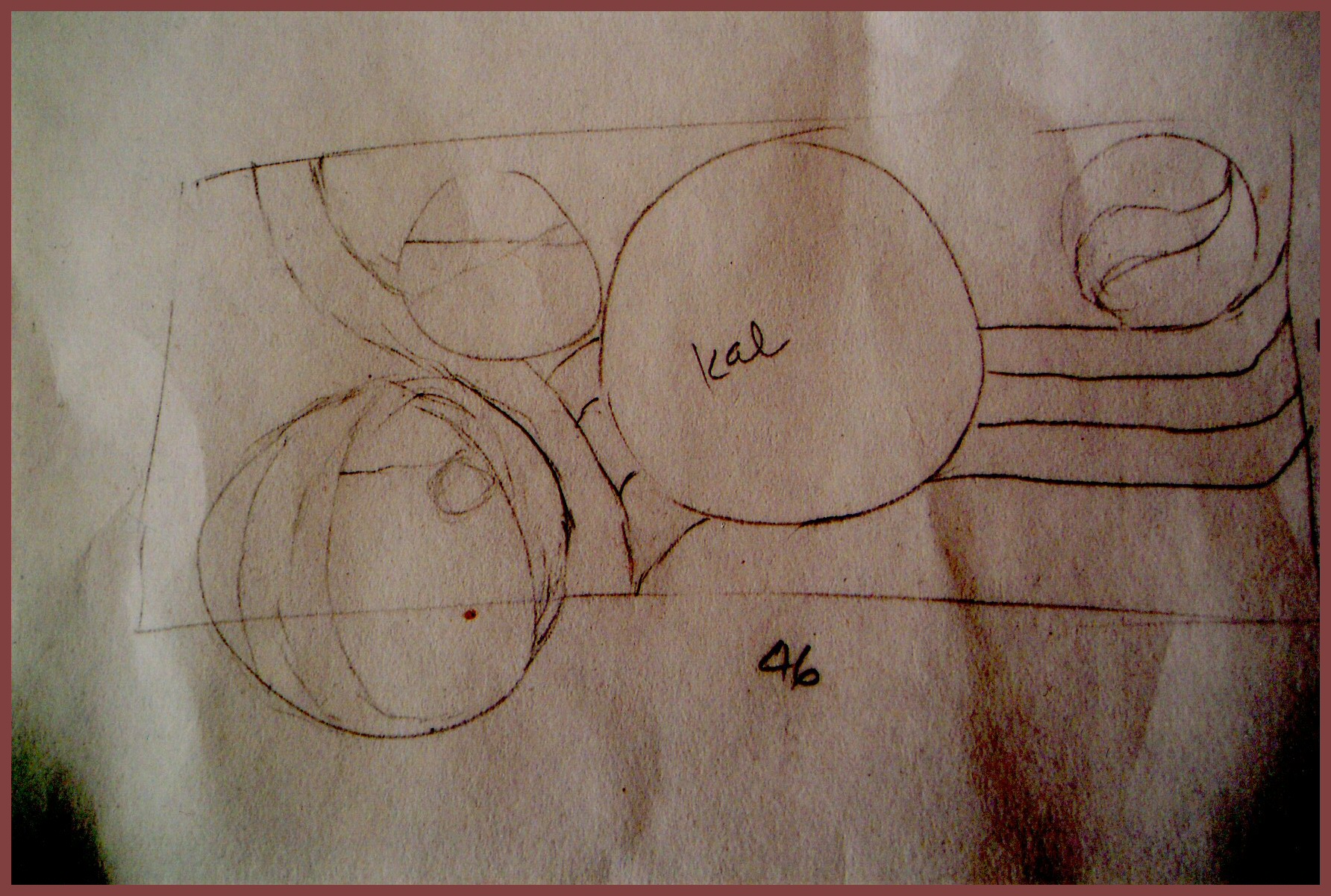
Soon I put together many of my design books for stained glass (mostly Dover) and a notebook of my own projects and went over to Joycelyn’s place. We looked around at her living room, noting the design elements and colors that already existed (heavily Southwest), looked at the space above some bookcases where the wall hanging would be hung, and determined a size of 46 x 18 inches. We went through all the idea books, putting Post-Its on all the pages that showed something she liked. Then we went back to each Post-It page one by one and discussed which details she liked, pulling graceful lines from one, circles from another, and placement from yet another as well as the idea of having one design element go outside the basic rectangle. We made a rough drawing of what we had in mind…

…and set off for the quilting shops for fabric. Two stores later, voila! We found a Southwest abstract in several color schemes. There we sat on the floor of a fortunately empty store, bolts all around us and two store cats wending their way in between us, and we made our decisions.

As I drove home after our purchase, I was utterly amazed that in one short afternoon we had both designed the wall hanging and bought the fabric! I had expected a much more laborious process. Our success lay in Joycelyn’s innate design sense, which meant that, even without the element of color, she knew immediately what she liked and didn’t like. Combined with my experience in which details would likely work and which presented too many problems or conflicted with the overall design, we had made short work of the whole designing process.

Then began several weeks of communication with each other whenever there were decisions to be made about colors and other details, sometimes in person and sometimes via photographs and e-mails. We were both startled at the number of times we had been independently thinking of the same change. We progressed through the paper true-to-size layout…

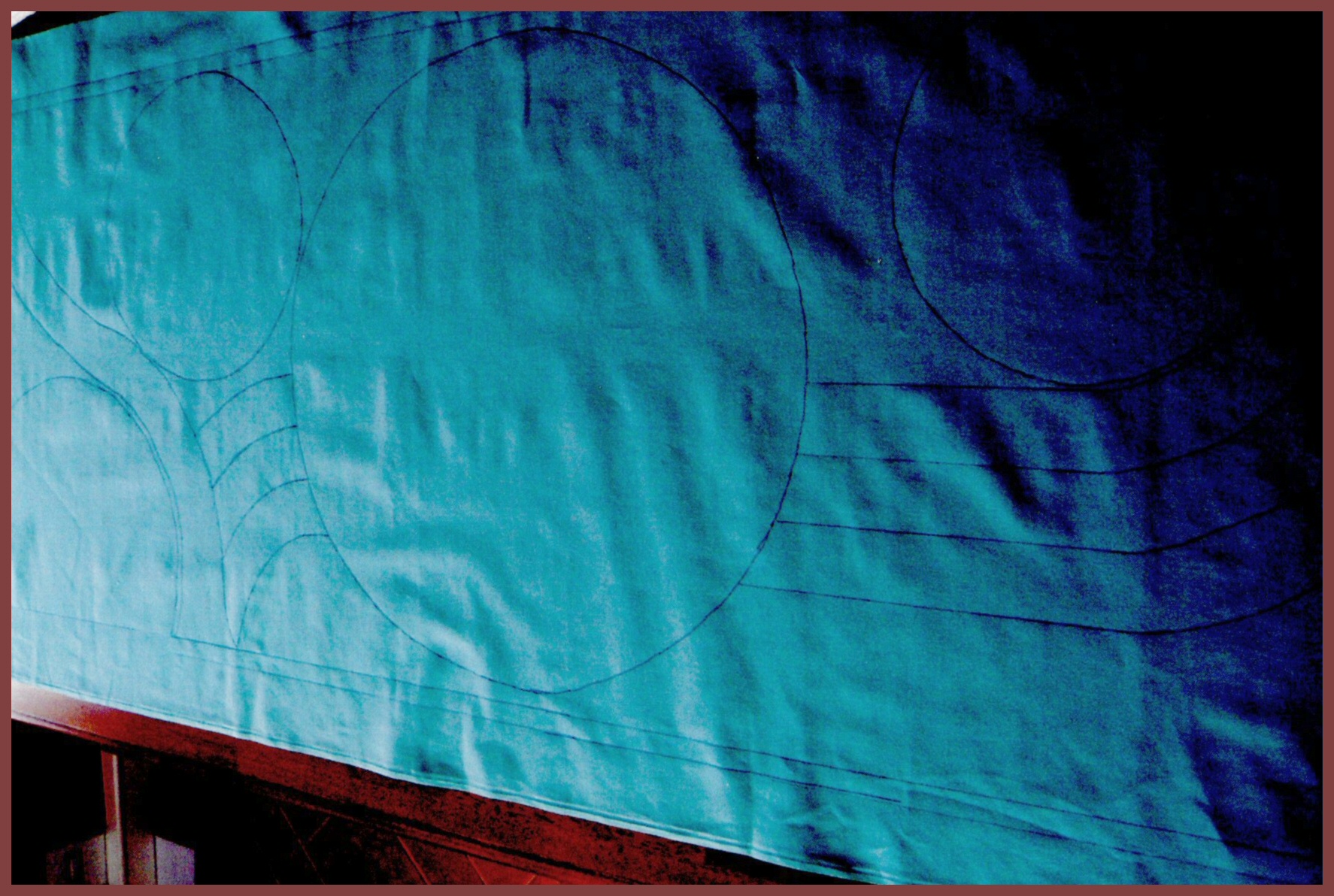
…transfer of the layout to the background light teal fabric, grid quilting of the background…

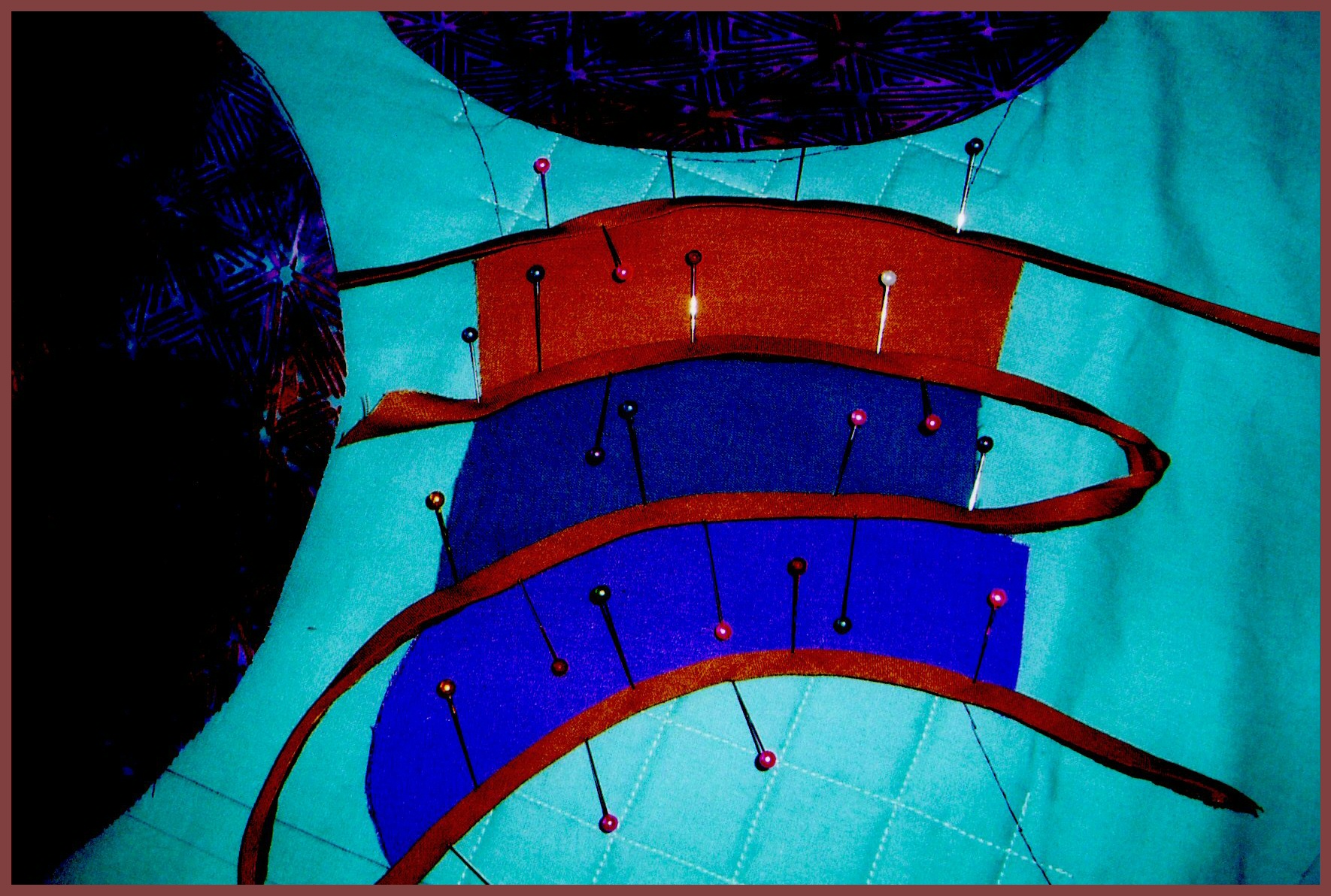
…placement and sewing of the curving lines, and assembly and attachment of the circles without a hitch.

I couldn’t find the right color of cording for some of the circles, but found crocheting thread and braided it into two sizes, and we both liked the texture the braiding added and the tie-off of the threads that created some draped detail.

When the wall hanging was nearly complete, we met in a gemstone shop to choose the final embellishments. Then, only two months later, her new wall hanging was proudly in place, a bold statement that pulls many elements of her living room together satisfyingly.

What a delightful adventure!

NOTE: I couldn’t agree more. Collaborating with Sylvia was great fun, and after just over six months, I can’t imagine not having this piece hanging on the wall of my living room.  It just seems to belong there. Thank you, Sylvia! Looking forward to our next project together.

all is not lost

Found on Radiolab. Wow!


this november life (3 poems)

November

November (Photo credit: Cape Cod Cyclist)

enough

Jeffrey Harrison

It’s a gift, this cloudless November morning
warm enough for you to walk without a jacket
along your favorite path. The rhythmic shushing
of your feet through fallen leaves should be
enough to quiet the mind, so it surprises you
when you catch yourself telling off your boss
for a decade of accumulated injustices,
all the things you’ve never said circling inside you.
It’s the rising wind that pulls you out of it,
and you look up to see a cloud of leaves
swirling in sunlight, flickering against the blue
and rising above the treetops, as if the whole day
were sighing, Let it go, let it go,
for this moment at least, let it all go.

~ ~ ~

november night

Adelaide Crapsey

Listen. . .
With faint dry sound,
Like steps of passing ghosts,
The leaves, frost-crisp’d, break from the trees
And fall.

~ ~ ~

reasons to survive november

Tony Hoagland
(you can listen to him recite the poem here)

November like a train wreck—
as if a locomotive made of cold
had hurtled out of Canada
and crashed into a million trees,
flaming the leaves, setting the woods on fire.

The sky is a thick, cold gauze—
but there’s a soup special at the Waffle House downtown,
and the Jack Parsons show is up at the museum,
full of luminous red barns.

—Or maybe I’ll visit beautiful Donna,
the kickboxing queen from Santa Fe,
and roll around in her foldout bed.

I know there are some people out there
who think I am supposed to end up
in a room by myself

with a gun and a bottle full of hate,
a locked door and my slack mouth open
like a disconnected phone.

But I hate those people back
from the core of my donkey soul
and the hatred makes me strong
and my survival is their failure,

and my happiness would kill them
so I shove joy like a knife
into my own heart over and over

and I force myself toward pleasure,
and I love this November life
where I run like a train
deeper and deeper
into the land of my enemies.

Post Navigation