give me a daisy

~ ~ ~ ~ read ~ write ~ look ~ listen ~ create

Archive for the category “Writing”

on sunday morning

Sunday

Sunday (Photo credit: ex.libris)

On Sunday morning, Lessie woke up late, tangled in a nest of her own black hair, which she hadn’t pinned up before falling asleep. She’d been too downhearted last night to do the normal things she did on a normal evening before going to bed—things like washing her face and brushing her teeth and breathing a prayer of thanks for the wondrous day and asking for a dreamfull night. Yesterday hadn’t been wondrous or any kind of normal and she hadn’t wanted to dream. All she’d wanted to do was fall into a senseless void where she could forget herself, forget her body, forget the things her eyes had seen and her ears had heard when she walked into the house late in the afternoon. The blue canvas shopping bag had slipped from her fingers to the floor, so the eggs smashed and the milk spilled, and the frightened cat dove out the open window. Thelma and Eddie just got up from the couch, fixed their clothes, and walked out the front door together, slow and easy, with only a sideways glance in her direction, while her heart fell on the floor and got stuck together with the broken eggs and the spilled milk. She had left the whole heartbroken mess where it was, to be cleaned up in the morning; which was now.

accepting the Very Inspiring Blogger award

blogaward

Thank you, Debbie and Container Chroniclesfor nominating me for the Very Inspiring Blogger Award. (I can hardly contain myself!) But seriously, I’m really pleased and grateful for the nomination and to be able to share it with other bloggers.

there must be rules

  1. Display the award logo on your blog.
  2. Link back to the person who nominated you.
  3. State 7 things about yourself.
  4. Nominate 15 other bloggers for this award and link to them.
  5. Notify those bloggers of the nomination and the award’s requirements.

there must be 7 things about me

  1. I named my cat Naima after the ballad John Coltrane wrote–and named–for his first wife (it’s on the album Giant Steps). Naima means “tranquil,” which is probably why my cat refuses to answer to it.
  2. The first time I tried to leave home, I was 3. Then I laid low till kindergarten before making another attempt to escape.
  3. My favorite foods are raspberries, ginger, and cilantro. Coffee is essential. Dark chocolate makes everything better.
  4. For a few years, I was the firm administrator for an accounting firm. I created the Accounting Academy Awards to get us all through tax season.
  5. I’ve been writing and telling stories in one form or another from very early on. In my pre-teens, for example, I wrote over a hundred plays on lined loose leaf paper. Each completed “work” went into its own card stock report cover with the title handwritten in the little rectangle on the front.
  6. In the 70s, I had a job where I went to work barefoot one day, and the only question anyone asked me was, “Aren’t your feet cold?”
  7. If I only had one day left to live, I’d want to spend it hiking in Pt. Reyes National Seashore.

there must be sharing!

Here are 15 fellow bloggers I’m nominating for this award. Please check them out and see for yourself how good they are.

  1. Sorting it Out
  2. LUGGAGE Lady
  3. Meaningful Life
  4. Under the Blue Door
  5. Xenogirl
  6. K.L. Wightman
  7. Internal Evolution
  8. It Started with a Quote
  9. Courage 2 Create
  10. The Running Father Blog
  11. My Life in Color
  12. Flashlight City Blues
  13. Hege Nabo
  14. The Happsters
  15. Land of Enchantment Blog

Thank you again, Debbie, and thank all of you inspiring bloggers for doing what you do. Being able to peek into so many different worlds makes my world that much richer!

Julie

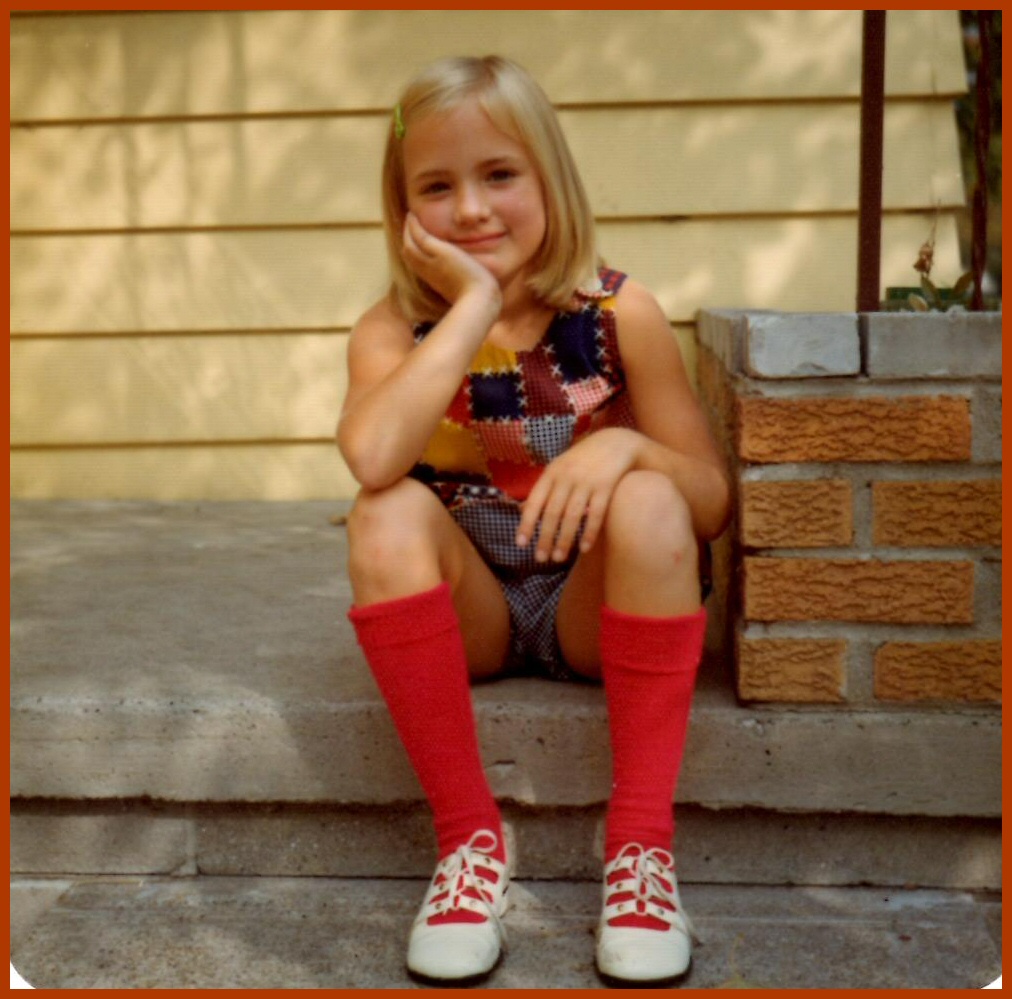
JulieJulie, the youngest of Jim’s girls, was everyone’s pet, easygoing and funny. She was also the girl of many nicknames: Jules to most, Goldie to her dad, and later Wobbles, after one of her sisters teased her about not being able to walk straight. Julie thought that was about the most hilarious word she’d ever heard. When she wrote it down she spelled it W-A-B-L-S, which is exactly how I spelled it—capital letters and all—when I embroidered it in multi-colored floss on a white sweatshirt she wore with pride.

From the time she was a baby, her older sisters and a housekeeper were her primary maternal figures. Somehow she came out perfect, a sunny, energetic child with a great sense of humor who brightened up the room for everyone in it.

night after Julie

Moving in a dream…
I…
Tripping
Through the steamy night…
Blue-gray mystic…
Soft rain dust…
Floating…
Turning inside out…
Touching air
And water
And blonde
And blue-grey child
Touching…
Me.

Julie

Julie2

Julie was a spunky child with love and affection to spare. She seems to have been born equipped to roll with the punches, to take it all in stride. I hope she’s still all that.

Lainie

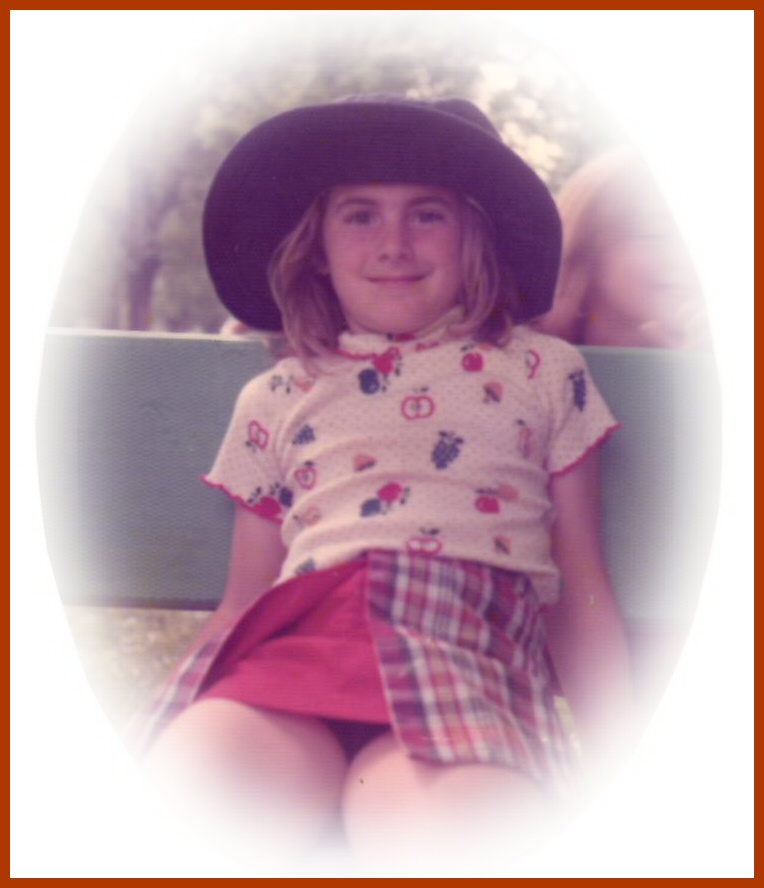
Lainie3Lainie, the middle of the three girls, was quieter than the other two, both perceptive and enigmatic–and with an air of self-sufficiency. When she spent time with me, I never had to make any special arrangements or go out of my way to entertain her. She liked hanging out with me and was more than content to tag along when I went to the dry cleaner or picked up a few groceries.

Sometimes the two of us spent an entire evening sitting in separate chairs, reading our separate books, barely talking to each other but always connected.  What she wanted was the experience of normal, everyday life with me in it. Nothing special. A few times she called me “Mom,” in a small, hopeful whisper that nearly broke my heart.

whose child?

I have names for you
and metaphors.

Mermaid.
Lily Maid of Astolot.
Elaine.

I look at you and wonder:
How’d the wheat get in your hair?
and the river in your eyes?
Wildflower,
What contents you
to be domesticated so?
Now ballerina
and assistant cook.
Do you include in these
mysterious ingredients:
ritual dances and magic herbs,
delicate sorcery
to cast your spells?

Fairy Princess,
in exile from your majesty,
You look at me
and only want to call me “Mother.”

It’s so simple.
Why is it so impossible to be.

Lainie1

Lainie2

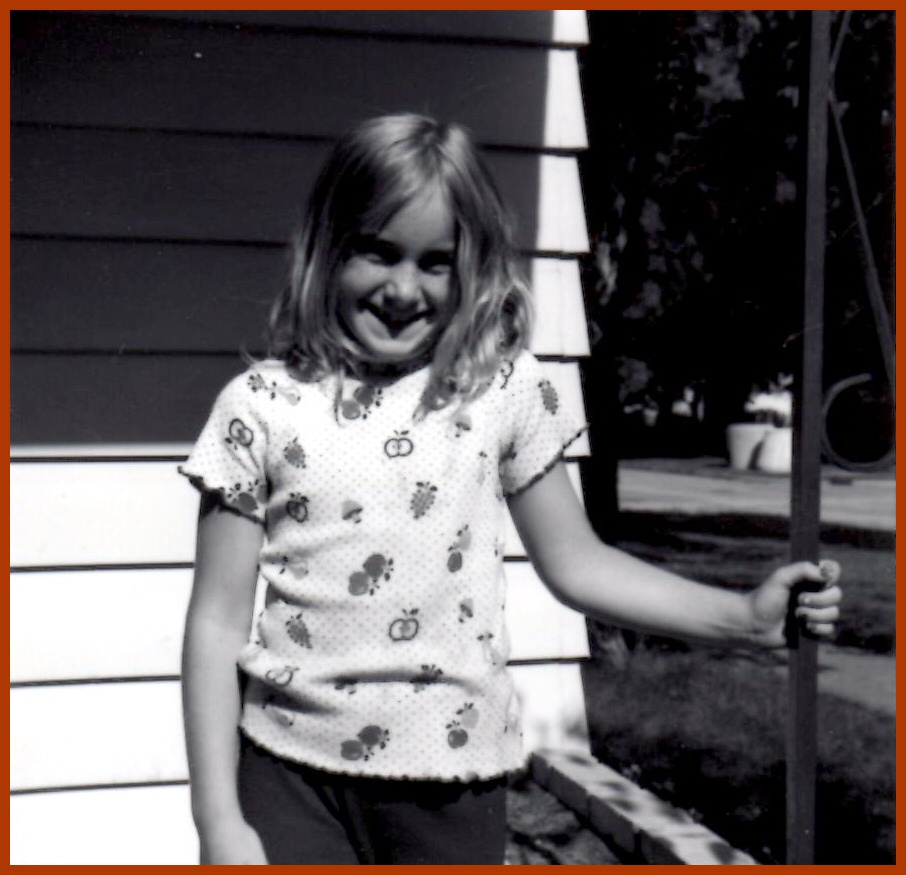
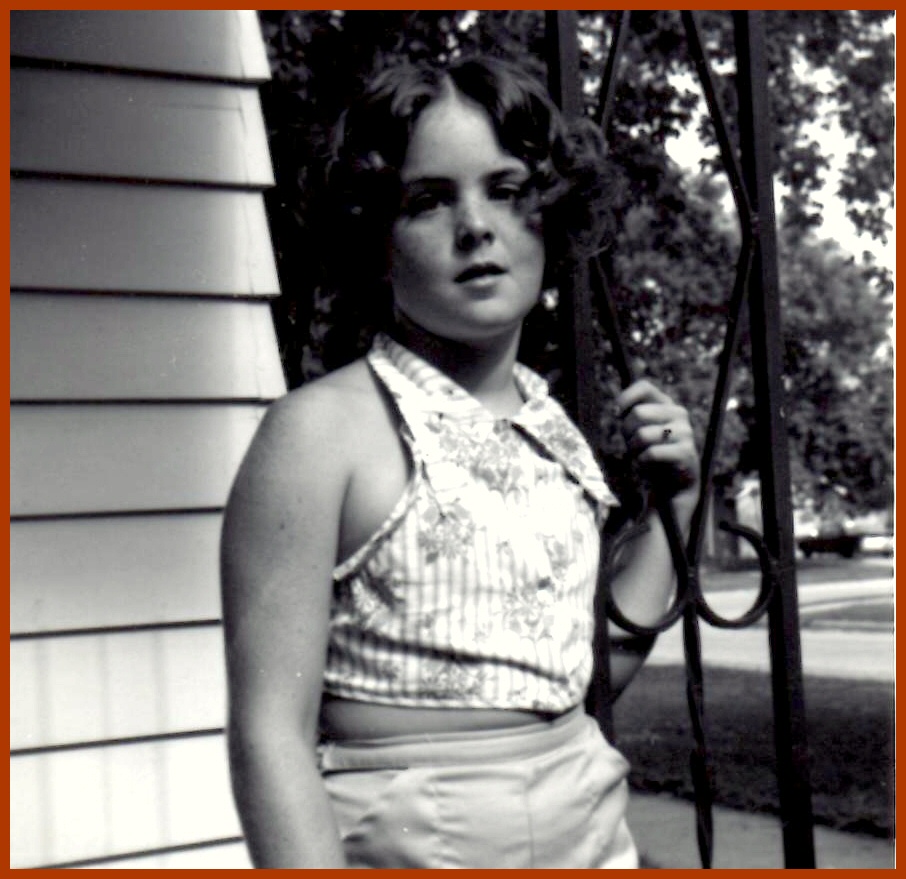
This giggling girl was wise beyond her young years. Wherever she is, I hope she’s happy and has someone who makes her laugh.

P.S.: She really did own more than one shirt, although for some reason she’s wearing the same one in most of the photos I took of her.

Next time: Julie

Leane

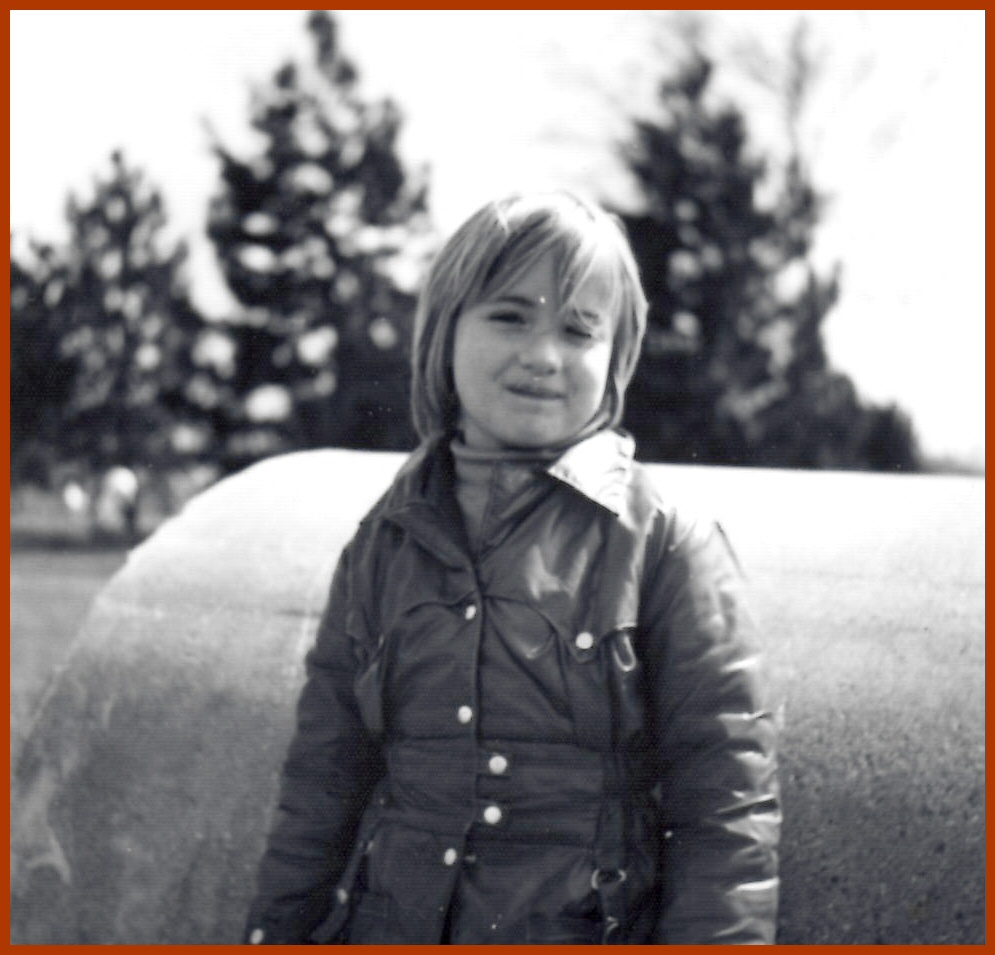
LeaneLeane was the oldest of Jim’s three girls and also the biggest handful. A nonstop talker, she needed to have someone’s constant attention. That was why I initially started spending time with each of them separately, to give all of them some one-on-one time.

She was the only one of the three who remembered and missed her mother. How do you get over that kind of betrayal? But whenever she wanted to talk about her, it seemed like no one else in the family was interested. Julie was too young to remember her mother and Lainie, surprisingly pragmatic for her age–or maybe not–had written her off.

Since Leane was curious about sex, I bought a couple of age-appropriate books on the subject and during one of her overnights we spent an evening sitting on my bed looking at the pictures and talking about the strange ways men and women have of relating to each other.

wind chimes

Listen:
These chimes are made of glass.
They sparkle in the sun
And in the wind they make a joyful noise.

Do you know
The joy you reach for so eagerly
Can illuminate your life
Like those prisms of glass,
Or smash into a thousand pieces
Sharper and more painful
Than any shards of glass.

You are a reckless child.

Are you too old for lullabies?
Is that why
I try to lull you instead
With these disembodied words?
Can I hypnotize you into believing
in the natural superiority of reason
in my adult view of things
that everything is all right
and down is up?

So many words.

They circle around your pain
Trying to tell you it doesn’t hurt.
Trying to tell you what to be
Instead of listening to who you are.

Who are you?
Knowledge is a wound sometimes
And people are afraid.
You are.
I am.
But we have chosen each other,
And I can look at you now
And listen to you:
All of you there is
And all there is to come.

Who are you?
Child of love and fear
Wind howling in the night
Love burning a fever
Need tracing a pattern of tears and hopes
on face and pillow,
Daughter of my heart and soul,
I know you–
more than it is easy to know
but not more than I want to know.
You can look at yourself in my eyes
and see someone who is loved.

I gave the poem to Leane. She was old enough. She said she hadn’t known I felt that way about her.

Leane1Leane2Lovely, lovely girl! I hope the world has treated her better since that rocky start it gave her.

Next time: Lainie

Jim’s girls

Leane, Julie, LainieJim was an engineer I dated for the better part of a year. He had three daughters who were, when I first met them, 12 (Leane), 10 (Lainie), and 5 (Julie). His wife had gotten custody five years earlier when they divorced. That’s right; Julie—or Jules, as she was called—was an infant. But instead of taking the girls with her to New York, as she’d promised, she left them with Jim, moved to Florida, remarried, and started a whole new family.

Who could–who would–do something like that?

For a while I spent my weekends at their house, more often than not the one who woke during the night at the slightest sound of coughing or of sleepy, stumbling feet. During the day, I helped them on and off with their snowsuits in the winter and fixed dinner while Jim worked on cars in the backyard with his buddies. It was a cozy domestic arrangement that didn’t last long. I tried to capture Jim in this poem:

aura

Silver.
Softened sometimes
by nightlight:
crystalline
and lustrous.
On rare days
catching the sunlight
and shining.
But hardened mostly,
into metal flakes,
chrome and steel
like your cars.

When we had the breakup discussion, I told him somewhat defiantly that I wouldn’t give up the girls. To his credit, he said, “Of course not,” and we arranged a visitation schedule. He worked in the city where I shared a house with my friend Debbie. Every week during that summer, he brought one of the girls with him in the morning and dropped her off at our house. After work the following day, he picked her up. When I was feeling reckless, I asked him to bring all three.

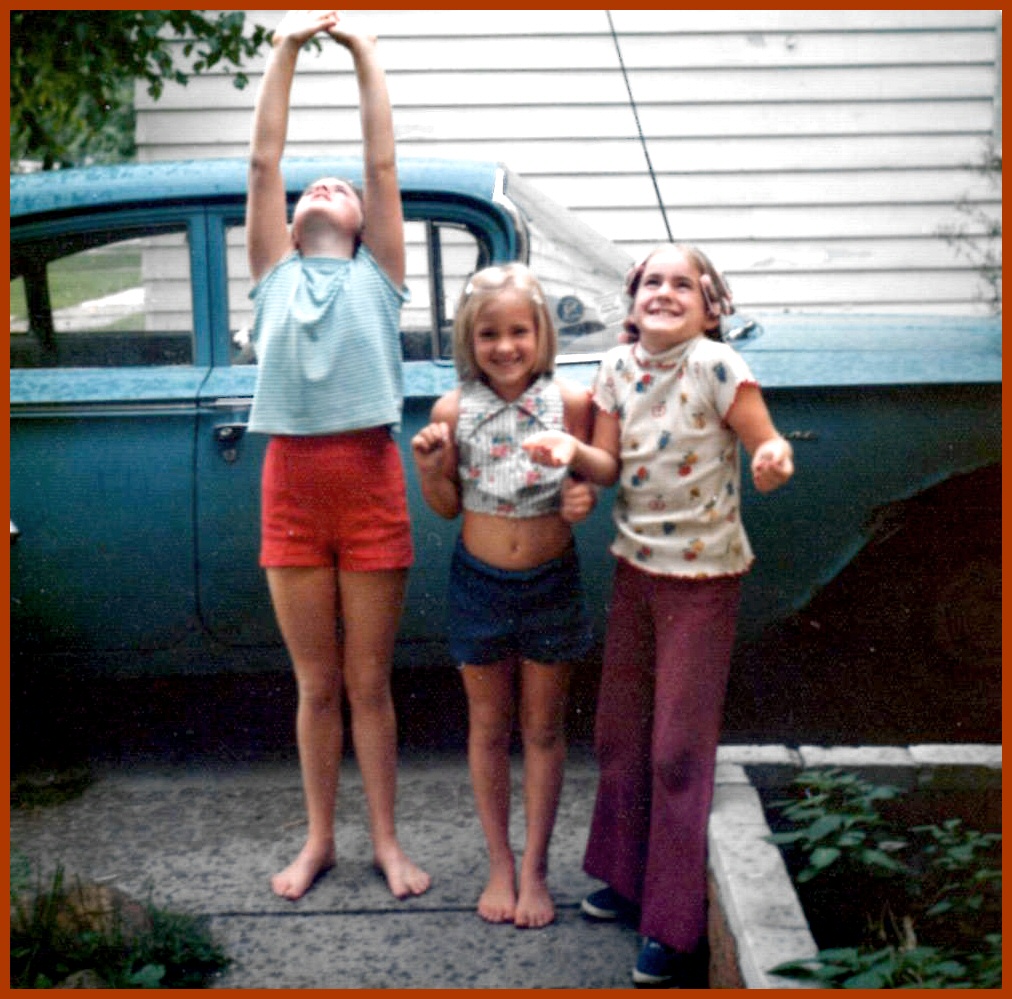
New School ClothesI left their lives too soon, too, but before I moved from Michigan to California, I took each one shopping for school clothes and shoes. The photo on the right was taken as we were about to head off for a music concert late in the summer. I love how they look like they’re in a police line-up. The day I left, Debbie drove me to the airport and brought Leane and Lainie along to see me off. I remember it being a muggy, gray November day. Julie didn’t come. She said she didn’t want to watch me go. But I gave them a big stuffed animal, a gift from an old boyfriend. The girls named it “Gor,” short for Gordon, the ex. They took turns sleeping with and fighting over it.

I know because they told stories on each other in the cards and letters they sent during the year after I left.  I also saw them when I went home for a visit about 14 months later. But eventually we moved on–or so it seemed at the time. I’ve always hoped I didn’t do them more harm than good by getting so close to them and then leaving. I know I was the lucky one to have had all that time with them.

Next time: Leane

stormy weather

Two poems about the sometimes rough weather of relationships, one written by my partner and the other written by me, before we knew each other.

weather man

Storm

I’m a storm center. Still,
Sun broke through, warming her
Now and again. Then I’d think,
She is bound to get used to
my weather.

Always, though, cloudbanks
Returned to us, scudding ashore
Like a black threat. We stood
At the seawall, screaming
into the wind.

She said it was nothing to her
If I wanted to waste my days
Gathering darkness, but
She needed light, craved
spaciousness, clarity.

She was tired of grayness
Clinging to edges, fogging
Our seasons. Winter forever:
Words freezing, losing their
power to move.

I told her
There’s nothing that changes
as fast as the weather.

“Not yours,” she said, turning
To stare out
the window.

She left unexpectedly. I was
Astounded; the day had been fine.
I ran where I thought she had gone to.
“Look! Look!” I shouted.

“The sun is shining! The sun
is shining!”

schism

Pose de 90 secondes. Lightnings. 90 seconds ex...

Lightning struck
the room,
Illuminating
our sins,
splitting us
into separate pieces
and sending us
to different places:
You to purgatory
and me to hell,
although it may only be
a trick of the mind.

But then why
am I
still burning?

And why
do we speak
to each other
in foreign tongues?

I can’t hear you
over the howling
of the wind
and I wonder
if you can see
the rain
washing away
the traces.

If it rains
long enough,
will it put out
the fire
and bring me
back to earth?

just driving

Dead End Sign

Dead End (Photo credit: Susanne Davidson)

I’m driving my car alone at night. It’s very dark: black like midnight. There’s no one else, no other cars, no other people. The darkness is palpable. It has a texture. Smooth, but not exactly soft. I think of wool, but that’s not exactly it. Let it go.

I have no sense of what I’m wearing or the feel of the air against my skin. All I’m aware of is driving, moving, the motion of the car—and the darkness, which is an envelope that contains me.

I’m driving along an empty road, alone in the middle of the night. I find it odd now, but I used to do it all the time in Michigan. I was much younger then. I often drove home late, late and alone, on River Road or I-75. It was unremarkable, comfortable, familiar—although sometimes bittersweet, depending on where I had been. And who I had been with.

This is a different empty road I’m driving on, in West Marin, maybe near Olema, but I know it very well. I have no specific destination, no particular sense of purpose. Then I come to a stop sign where the road dead-ends, and I have to turn. I have to make a choice. Which way should I go, left or right? I should know which way because I’ve been on this road many times before. Why don’t I know which way to turn?

Consternation. Even though it’s the middle of the night and there’s no traffic, no one behind me, no one with me, and I don’t need to be anywhere by any particular time, I feel a sense of urgency about deciding. I must choose. I must choose now.

I choose to turn left. I don’t know why. I begin driving down the road on the left and soon find myself in an unfamiliar place. The road goes up and down hills, twists and turns, and runs between buildings. The buildings are brick, the size of houses or a little larger, all the same pale color. The area is deserted, but the pattern of streets and buildings is very busy.

I now know I have made the wrong choice. I decide to retrace my route back to the point of choosing and choose again. It’s surprisingly easy to do it, to go backward. Even though I’ve made the wrong choice, I haven’t gotten lost. I can find my way back.

How have I recognized that I’m in the wrong place? Is it just the strangeness of the surroundings? I don’t know. When I return to the point where I turned left, I continue traveling straight. Now I feel that I’m moving in the right direction. It feels like alignment, balance, correctness—not all that remarkable. It’s the absence of that feeling that was noticeable and even disturbing.

Night Sky, Moon

Night Sky, Moon (Photo credit: thisreidwrites)

Now I’m driving on a country road that curves gently here and there. I’m still the only one traveling on it. I can’t really see very much, but I know there are trees and hills alongside the road. I feel that I know where I am. As I come around a curve, I look up and see the moon in the dark sky. It’s a half or three-quarter moon, and I can see both the dark and the light parts—a complete circle of moon surrounded by a thin ring of light. It is very large, three or four times larger than normal for this late at night. This moon is so compelling. I stare at it for several seconds, caught by it, surprised by it. Why am I seeing it? What does it mean?

When I look back at the road, I see only black in front of me. I blink my eyes a few times to clear them, but nothing happens. Now I’m driving down this country road, alone, in the middle of the night, and I’m blind. I don’t slow down. I don’t veer off the road. I just keep driving.

This is dangerous, but I’m not afraid. I still don’t slow down. I have been blinded by the moon. Blinded by the light of the moon, and driving, driving, driving in the right direction. There’s no one else in my midnight, moonstruck world, and nowhere I need to be. I’m just driving.

San Francisco poems (1974)

last days

English: Fog at Ocean Beach in San Francisco i...

Fog at Ocean Beach in San Francisco is clearing up (Photo credit: Wikipedia)

Smoke dreams,
the days went in a haze
of musky air;
green and gold and lavender
love-spangled hours,
sun-dappled minutes;
fleeting glimpse
of someone
here or there.
Yellow.
Red.
In dreams conceived and born,
short-lived,
to dust return:
finely colored ash,
dissolved and lost.

ocean beach 

I.
Splash!
and a riot of foam:
the waves
roll in,
swallowing
the beach meticulously,
inch by inch,
sucking in
pebbles and shells
and footsteps
of bathers—
unwrinkling the shoreline
and retreating.

II.
A small bird
tracks
delicately
across
the newly varnished
surface
of the sand.

55.

lady,
inking a path
thru the night;
new words,
old words—
desires
translated into safety.

sleep
with a dream
or a pen
always breaks
in the coming of the dawn,
whose grey reality will
tear the page and
rip the fabric
of the night.

the infinity of possibilities
ends here
in the clarity of morning:
I don’t touch you,
not even with my words;
and the dreams are only
dances
on the far edge
of the lush and tender forests
we could know.

56.

Sometimes a goldfish,
I swim thru
the city’s nightwater
lit brightly from the top.
Neon and stars
indiscriminately
weld their light together:
a gold fishnet
of infinite capacity.

In the damp Pacific air
all the city is an ocean,
full of frogs,
and fish like me,
and seaweed
that tangles in my hair
and ties me
to the concrete ocean floor.

Chinese restaurant (novel excerpt)

This is another excerpt from my novel in progress, Skin of Glass.

Five-Happiness-Restaurant-San-Francisco-Interior

Five-Happiness-Restaurant-San-Francisco (Photo credit: foodnut.com)

November 1990. At the end of his shift at the bookstore, Ethan intends to grab a sandwich from the deli and go home to work on his paper on symbolism and surrealism in Modern Greek Literature. But once he’s behind the wheel of his car, he’s thinking not about Greek Literature but about Eve. Again. His plan falls apart at the first red light; fifteen minutes later he’s in a phone booth on Van Ness Avenue dialing her number. It’s rush hour and the blare of traffic and stink of exhaust fumes make him dizzy. His nerves are frayed and his reflexes dulled from lack of sleep. If he doesn’t finish his paper by the end of the week, he’s going to nail an incomplete. It goes without saying he isn’t getting any writing done.

When he started daydreaming about Eve, it was a harmless fantasy. Then he began seeing her face everywhere. It’s reached the point where he has to talk to her, at least hear her voice, hear her say his name, if only to tell him to go to hell. He feels as though he’s waiting for the results of some medical tests that mean everything: life or death.

She answers the phone distractedly, but after he identifies himself, she says, “Ethan!” clearly surprised to hear from him. Possibly pleased? Or is he projecting? When he says nothing else, she asks him if anything’s wrong.

“No, nothing’s wrong. I just wondered…have you eaten yet? Do you want to get something to eat?” There’s no warmth in his voice, no invitation. His hand is clamped around the receiver, and he’s staring through the grimy glass enclosure at the three lanes of cars stopped at the corner for the light.

“With you, you mean?”

The light turns green. The booming bass from a passing car vibrates along the pavement and travels up Ethan’s body, all the way to the hand holding the receiver. He says, “Yes,” amid the sudden crescendo of gunned engines. He feels his mouth form the word, but he can’t hear his own voice. When she doesn’t respond immediately, he wonders if he actually said it out loud, if she heard him. He won’t say it again.

“Sure,” she says. “But I need to change; I just got home. Can I meet you somewhere?”

He hadn’t thought that far, but the image of her sitting across from him at that Chinese restaurant pops into his head. He doesn’t remember the name, but she does, and they agree to meet there in an hour. When he hangs up, he looks through the phone book for the address, then walks swiftly toward his car, which is parked illegally across the street. The darkness seems to have deepened in the space of his telephone call, or in response to it. He could go to the library and get a little research done. At least he’d be doing something productive. But until he sees her and settles this thing somehow, it’s hopeless to try to carry on with his everyday life.

The restaurant is on Grant Avenue in Chinatown, an area he doesn’t know. He drives across town and spends twenty minutes trying to find parking. Even this time of year, the street is noisy and crowded, bustling with automobile and foot traffic. He parks on a side street a few blocks from the restaurant and tries to walk off some of his nervous energy. It’s cold and windy; he moves with his head down, his hands stuffed into the pockets of a gray down vest, not looking at anyone, and not bothering to glance into any of the lighted store windows filled with cheap souvenirs and garish clothing. What exactly is he doing? It would have been better for everyone, including him, if Eve hadn’t been home, or if she’d refused to meet him. In fact, he thinks she should have refused. He’s already mentally convicting them of betraying Jesse, although the only betrayal so far is his, and it doesn’t have to go any further.

He enters the restaurant, immediately fortified a little by the aroma of garlic and ginger. The petite smiling hostess shows him to a table for two, assuring him she’ll watch for Eve. He orders a beer, shrugs out of the down vest, and leans back in his chair. He looks around, trying to remember where they sat when they were here for the birthday party. Several tables had been placed end-to-end. But it was a long time ago, and all he can picture is Eve and the heavy red draperies and table linen.

He glimpses himself in the mirrored panel of a room divider and almost doesn’t recognize himself. He looks like a vagrant, somewhat sinister. He goes to the restroom to splash his face with water, run his fingers through his unruly mass of hair, and wash his hands. The whites of his eyes are so bloodshot they look pink; there are dark circles under them. A clear, firm voice in his head says, Leave now. Just go. But he can’t.

He’s back in his seat taking a sip of beer when the hostess leads Eve to the table, both of them smiling as though they share a happy secret. Ethan rises but doesn’t touch her, doesn’t smile, just says her name, “Eve.” Once they’re seated, a waiter places a pot of tea on the table and hands them menus. Eve slips her arms out of her camel’s hair coat and lets it fall against the back of her chair. What now?

She takes in the room. “I haven’t been here since January.” The memory seems a pleasant one. “Have you?”

“Me?” He shakes his head. “I almost never eat out. That was a special occasion.” He has one hand around the cold, wet glass of beer. He can barely look at her. All he registers is that she’s wearing a pale yellow sweater with a high neckline, and her hair is shorter than he remembers. They focus on their menus, although he isn’t really reading his. “You’re more experienced with this. Why don’t you choose?”

“But what do you like?”

“Anything. I’m not fussy.” Afraid he’s being rude, he adds, “I’m sure whatever you select will be perfect.”

Her skin is almost white. Porcelain. He feels vulgar and coarse by comparison. Classic beauty and the beast; they shouldn’t even be occupying the same table. She studies the menu pages, humming to herself so softly and unselfconsciously it melts him, the same way Molly melts him when she sits on the floor singing made-up songs to her dolls.

Eve recites her choices aloud, then repeats them to their waiter, adding, “not too hot, please.” The waiter—Chinese, with close-cropped hair and wire-rimmed glasses—bows and nods.

“Jesse always gets the Kung Pao Tofu here. This is his favorite restaurant in the City.”

Ethan sighs. Why hadn’t that occurred to him? This is such an amazingly bad idea. Jesse is going to be here at the table all evening. Well, it’s what he deserves.

“Did I say something wrong?”

He shakes his head, suddenly drained, too tired to be here, to be doing this. “No, no. This is probably a bad idea. I’m pretty tired. Not very good company. I’m sorry.”

“You just need some food.” She pours tea for both of them. “Are you taking any classes this semester?”

He laughs. “One. Modern Greek Literature. Which I’m doing my absolute best to fail.”

They pass the time talking about teachers, classes, and homework. When their food arrives, he picks up his fork, but Eve insists he learn how to use the chopsticks. It takes him a few minutes to grasp the concept, and even then he’s far from adept. They slip from his fingers, clattering against the plate, and he drops bits of food on their way to his mouth. The rice is especially tricky. They both laugh at his attempts, but she encourages him and his technique improves.

He asks her when she started doing art and learns her father’s an architect.

“I used to go to his office with him, and sometimes I’d draw these fantastic, elaborate houses while he was working. I wanted to do what he did. In fact I would have gone into architecture, but I couldn’t hack all the math. It would have been a much better career choice than fine art, that’s for sure. But I’m rethinking that.”

“Rethinking what?”

“What I want to be when I grow up. It’s one thing to make art for yourself, but I’m not sure about trying to earn a living with it. And I can’t really say I’m driven by any grande artistic vision. I was planning to be an illustrator, now that I’ve finally mastered the human form.”

“What do you mean?”

“Learning how to draw people was hard. I was always pretty good at drawing things—structures, nature. Inanimate objects, I guess you could say.”

“It’s funny how that works. I still have trouble writing descriptions. If I don’t pay attention my stories all end up taking place in fields of white space. I guess I’m not very visual. I mean I see things but—”

“The trick is learning how to feel with your eyes.”

“Feel with your eyes?”

“I read about it in a book my father gave me.”

“An art book?”

“No. A novel. My Name is Asher Lev.”

“Oh. Chaim Potok. I read that one. Long time ago. So you know how to do that? Feel things with your eyes?”

She blushes. “Sort of. When I first tried it I focused very, very intently, but the harder I tried the more frustrating it was. I couldn’t get it. In high school I discovered the secret. Pot.”

They burst into laughter.

“Is your father an artist, too?”

“Technically, no, but he could be. He used to do these exquisite architectural renderings. When you’d see one you’d just want to live in it. In that world, I mean. But he doesn’t have time for it anymore. I’m not as good as he is.” She shrugs. “But this semester I have a photography course and I love it. Maybe because it’s new. But I can imagine being a photographer a lot easier than I can imagine being an artist. And I mean to get off the dole as soon as I can.”

“The dole?”

“Being supported by my father. He does some work for free, for community groups and nonprofit organizations, and I feel like such a leech that he’s still supporting me. I’d like to be on the other end, you know? Be making some kind of a contribution the way he does. Besides, I’m sure he has better things to do with his hard-earned money.”

“Well, speaking as a Dad,” Ethan says, with mock gravity, “I can’t imagine there’s anything I’d rather do with my money than spend it on my daughter. If I had any money, that is.”

“You say that now, when Molly’s, what? Three? Wait till you’re closing in on twenty years of financial support.”

“So would you stop doing art if you became a photographer?”

“No. I like to play with colors, textures, get the feeling of something or someone down on paper, to preserve it. Everything’s so temporary. This way I can preserve the memories.”

“Hm. Like impressionist photographs.”

“Hey, I hadn’t thought of that!”

By the time they’re finishing the lukewarm tea, he feels as though he’s been on a brief vacation. “This was delicious, every bit of it—at least every bit I managed to get into my mouth.”

“All you need is practice. But you did great for the first time.”

Her lipstick is gone, her blue eyes shining; she looks happy and relaxed, hunched over her teacup tucking strands of red hair behind her left ear. He feels a wave of affection for her. Affection. Nothing more. And he won’t ask for more; he won’t betray Jesse.

The waiter brings the check on a small black plastic tray. There’s a single fortune cookie on it. Ethan barely notices the waiter slip a cookie into each of Eve’s hands, he does it so quickly and smoothly. She blushes again, very becoming, and her eyes widen. She glances at Ethan and then at the departing waiter.

Ethan grins at her embarrassment. “There must be some super special fortunes in those cookies.” He reaches for the one on the tray, opens it with a single snap, pulls out the narrow piece of paper, and reads it aloud. “The road to knowledge begins with the turn of a page.” He rolls his eyes and crunches the pieces of cookie in his mouth. “Preaching to the converted here.”

She opens first one cookie, then the other, reading her fortunes to herself. Ethan waits for her to read them aloud, but she gives him a crooked half-smile and pockets them. He teases her about it, but she won’t tell him what they say. He pulls his wallet out and lays some bills on the tray. She slips her arms into her coat and he shrugs into his vest. On the way out, they nod to the waiter, who bows again and thanks them.

“Where’s your car? I’ll walk you to it.”

“It’s only a block away,” she says. “You don’t have to do that.”

“But I want to.” He presses the palm of his hand against her back, steering her in the direction she indicated. They walk slowly, in a comfortable silence. When they get to her car, she rummages through her handbag for her keys, and a small brush falls to the pavement.

“I’ve got it.” Ethan retrieves the brush and hands it to her. She reaches for it carefully, not touching his outstretched palm.

Suddenly she looks away. “Do you ever feel like you’re living someone else’s life? Like no matter how good you are you’ll never measure up?”

There’s a lump in his throat; all he can do is nod.

“Oh, listen to me,” she says, her tone shifting. “As if I have anything to complain about.”

But of course he knows what she means. He knows exactly what she means.

“Thank you, Ethan. That was wonderful. Such a nice surprise on a cold, gloomy day.”

He wants to say something light in response, but they’re standing too close, and instead of saying anything, he grasps her shoulders, pulls her toward him, and kisses her hard on the lips—waiting for her to push him away, maybe even hit him. But she sways unsteadily toward him so he folds his arms around her and she relaxes against him. A sigh escapes from one or both of them, and they stay like that, standing on the dark street in the cold, next to her car.

Post Navigation