give me a daisy

~ ~ ~ ~ read ~ write ~ look ~ listen ~ create

song of the trees

For the first 28 years of my life, I lived in Michigan, the Great Lakes State. We were inland from Saginaw Bay off of Lake Huron, so summers meant spending afternoons on the beach at Bay City State Park or driving up to Tawas City for the day. When I was a kid, our family spent a week or two every summer in a cabin on Higgins Lake, where there were daily motorboat rides on the Lake and weekends of waterskiing. Oh, yes, there was also a lot of swimming—but none of it by me. I never learned to swim and had a deep fear of the water for decades. I like to look at water, splash around in it a little, listen to the sounds of the surf or the waves, and even venture out on it in a boat once in a while, but that’s it. No swimming.

Not a happy camper. Can I get any farther away from the edge of this boat?

The first vacation my parents took me on was a fishing trip when I was about five years old. It meant leaving my baby brother behind and having my parents to myself. I loved every minute of it—except for the minutes when we were actually in a boat on the water, during which I reportedly whined or cried non-stop.

One day when I was a teenager, my mother, two brothers, and I were crossing on foot from the east side of town to the west side, which involved walking over a bridge. I refused to walk across the Third Street Bridge with them because I didn’t believe it was safe. Not only was it obviously decrepit, but you could look down between the wooden slats of the walkway and see the water! So I added a couple of miles to the jaunt by detouring solo to cross over the newer Memorial Street Bridge, which was constructed of concrete and steel. (Shortly after I moved to San Francisco, my mother sent me a clipping from the local newspaper with a picture of the collapsed Third Street Bridge.)

I lived in Northern California for close to three decades and spent a lot of time along the shores of the Pacific Ocean—especially the beaches at Pt. Reyes National Seashore, which is my favorite place in the world. I admit that if someone were to provide me with a cottage in Bear Valley and set me down in it, I would happily remain there for the rest of my life. Alas, that is unlikely to happen.

As it was, I moved to New Mexico, high desert with a rapidly dwindling body of water running through it that is still called The Rio Grande. Lots of other people have moved here from places adjacent to large bodies of water, and most of them sorely miss being near water. But I’m not one of them. I have realized that what all three places I’ve lived in have in common—and what seems more essential to me than water—are trees and lots of them.
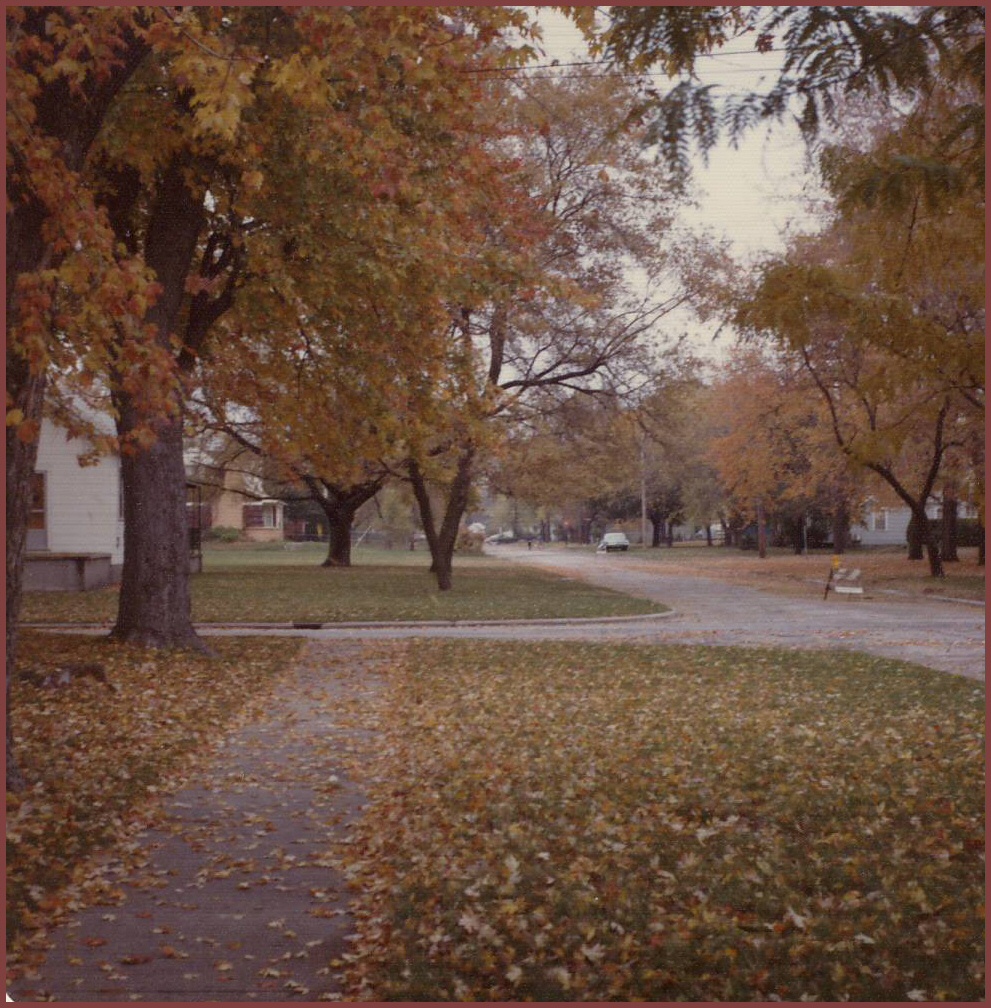
Faded photograph: the view down the street from the last house I lived in in Michigan, October 1974.

I’m thinking about trees right now because it’s autumn and the first leaves are turning yellow and gold. And that reminds me of Michigan, where the leaves are turning much more spectacular colors of the autumn rainbow. I haven’t been back to see that in well over a decade and it’s the thing I miss most about my home state. I missed it even more when I lived in California, where deciduous trees are in short supply. But I’m satisfied with the golden oaks and aspens here because as long as there are deciduous trees, there will come the budding of new leaves in the spring.
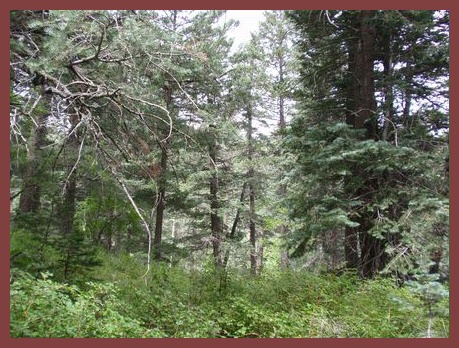
Tree Spring Trail

And that is now my favorite tree-time of the year. I like the architecture of trees in spring when the pale shoots decorate their branches with lacy green filigree. I think you can see trees best in the spring. Sometimes I drive around in late March and April just to look at the trees. It almost makes winter worth it. Snow on branches is pretty cool, but only for the first 60 minutes.

Pino Trail

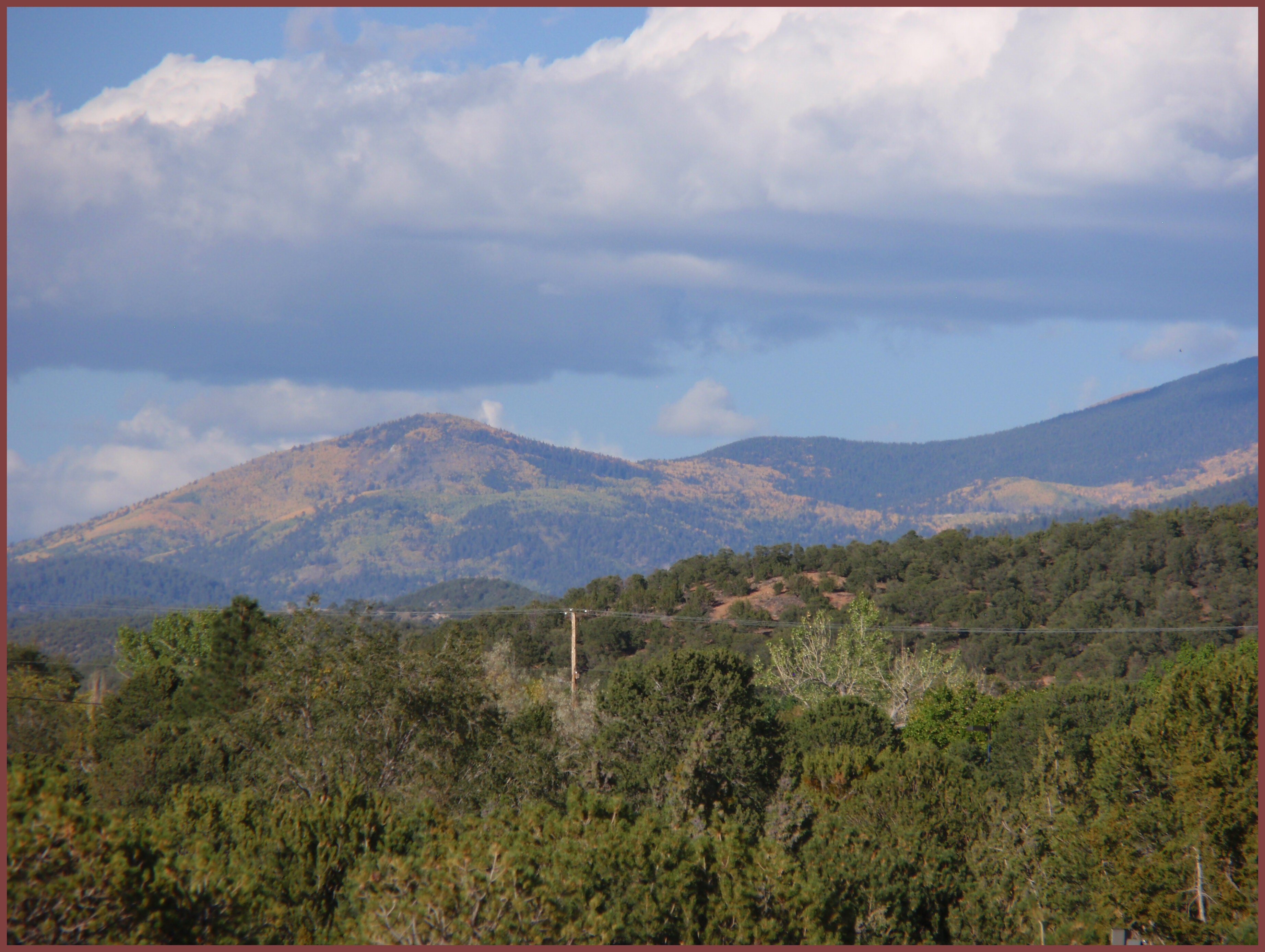
I loved to hike the trails of Pt. Reyes National Seashore in California, and I now love to hike the trails of the Sandia Mountains here in New Mexico. As long as there’s a trail in a forested area I can walk along—as long as I have trees—I’m home.

Faulty Trail

song of the trees

Here is Song of the Trees written and recited by poet, actor, and activist John Trudell:
what’s the big deal with Charles Bukowski?

The following is a guest post by Richard Ford Jones (brief bio below), a series of anecdotes drawn from his interactions with the dealers and clientele of an antique mart located in one of the oldest buildings still standing in Downtown Reno, much of which was lost to casino development. Jones works as a substitute floor person for dealers who can’t cover their required days. As with any collection of people, he says, there are personality clashes and mini-dramas galore, and cooperation is hampered by internecine squabbles. He attempts to maintain a circumspect demeanor in his dealings with the various factions.

1.

Due in part to the antique mart owners celebrating their sixth anniversary by laying out cookies, crackers, and cheese, it was a fairly busy day, and we had a few street people and assorted characters drop in. My ability to attract crazy people wherever I go remains undiminished, as all sought me out and engaged me in conversation. Per fellow workers, several are regulars who live downtown and come to the store to get out of the heat or cold and drink free coffee. They know to avoid them. I treated them all like customers, and we got along okay. One guy, a bit more together than some of them, actually thanked me for being nice to him even though I knew he couldn’t buy anything. This can be a tough town to be down and out in, considering how hard it tries to part people from their money. “I am my brother’s keeper” will never be the state motto.

2.

Early in the day, John, one of my fellow floor persons (he sells newer Oriental Art merchandise he buys from another store in the area and marks up) latched onto me and bent my ear periodically for seven hours. I just have “polite listener” written all over me, I guess. He started out by mistaking me for another dealer, a gay guy named “Duke” who sells Barbie dolls, G.I. Joes, old plastic car models, and Deco cocktail sets. There is a superficial resemblance; we’re both relatively thin (though I’ve developed a pot belly over the winter), balding, bespectacled white men in our late fifties with receding salt ‘n’ pepper crew cuts. But Duke has a thin mustache, bad skin, and is several inches shorter than I am.

I finally got John to realize he was talking to another person by pointing out that I only “looked” gay. He then went into a song and dance about how he couldn’t really see me clearly because he’d broken his glasses (he had a cheap set of drugstore readers he carried in his vest pocket). There was also some speculation on my being Duke’s evil twin, and I may have stuck myself with a new nickname.

3.

Our standout customer today was “George,” an old guy doing the full Gabby Hayes: scraggly grey beard and long grey hair, battered Stetson, frayed white canvas shirt under a black leather biker vest, grubby blue jeans several sizes too big, and beat up suede running shoes. He claimed he’d been, among other things, a miner and a hobo. We got to talking, and when the wide-ranging conversation turned to scattering ashes of your loved ones, he declared he’d scattered his sister’s ashes in a casino. I told him about scattering Pop’s ashes on the east slope of Mount Tamalpais (in Mill Valley CA). George, as it turned out, was a graduate of Tamalpais High School. “You’re the first person I met in thirty years ever mentioned that name!” He ended up buying a three dollar silk rep tie. “Sometimes I just feel like dressin’ up.”

4.

One of our regular customers, a woman who appears to be schizophrenic, is obsessed with a “fortune telling wizard” the owner’s wife has in one of her booths. The wizard is a maddening device comprised of a black box atop which is a clear glass ball. Within the ball is a cast resin figurine of a wizard garbed in peaked hat, star spangled robes, and all. It has a proximity sensor and sound generator that produces an annoying electric scale run randomly every few minutes throughout the day, and a loud electric hiss whenever anyone comes near it. When fed a quarter, it verbally intones your fortune in a few brief, clichéd words.

This customer sometimes arrives just before closing to “consult” it, and if denied access to the wizard becomes very distraught. Yesterday, she also purchased a paperback copy of the Edith Hamilton classic “The Greek Way,” which she paid for in loose change. The manger allowed her to slide on $0.68 she didn’t have. She promised to bring the money today.

5.

“Dan,” who is five feet tall if he’s an inch, looks like a cross between Professors Irwin Corey and Timothy Leary in miniature, complete with the wispy grey hair, wry squint, and toothy grin (possible false teeth.) His story is that he’s of royal blood, related on the German side to the Houses of Hanover and of Saxe-Coburg and Gotha, but enjoys being a “commoner.” Yesterday when he was in, he led me to a case where the dealer was displaying some chi-chi ladies feathered hats. He pointed to a picture of Kate Middleton, Duchess of Cambridge, and told me he was proud to see “his cousin.” And the thing is it might just be true.

Like so many of the others who come in here, he just wanted someone to talk to. Still, you have to wonder what the big deal was about Charles Bukowski; maybe it’s just that he wrote it all down.


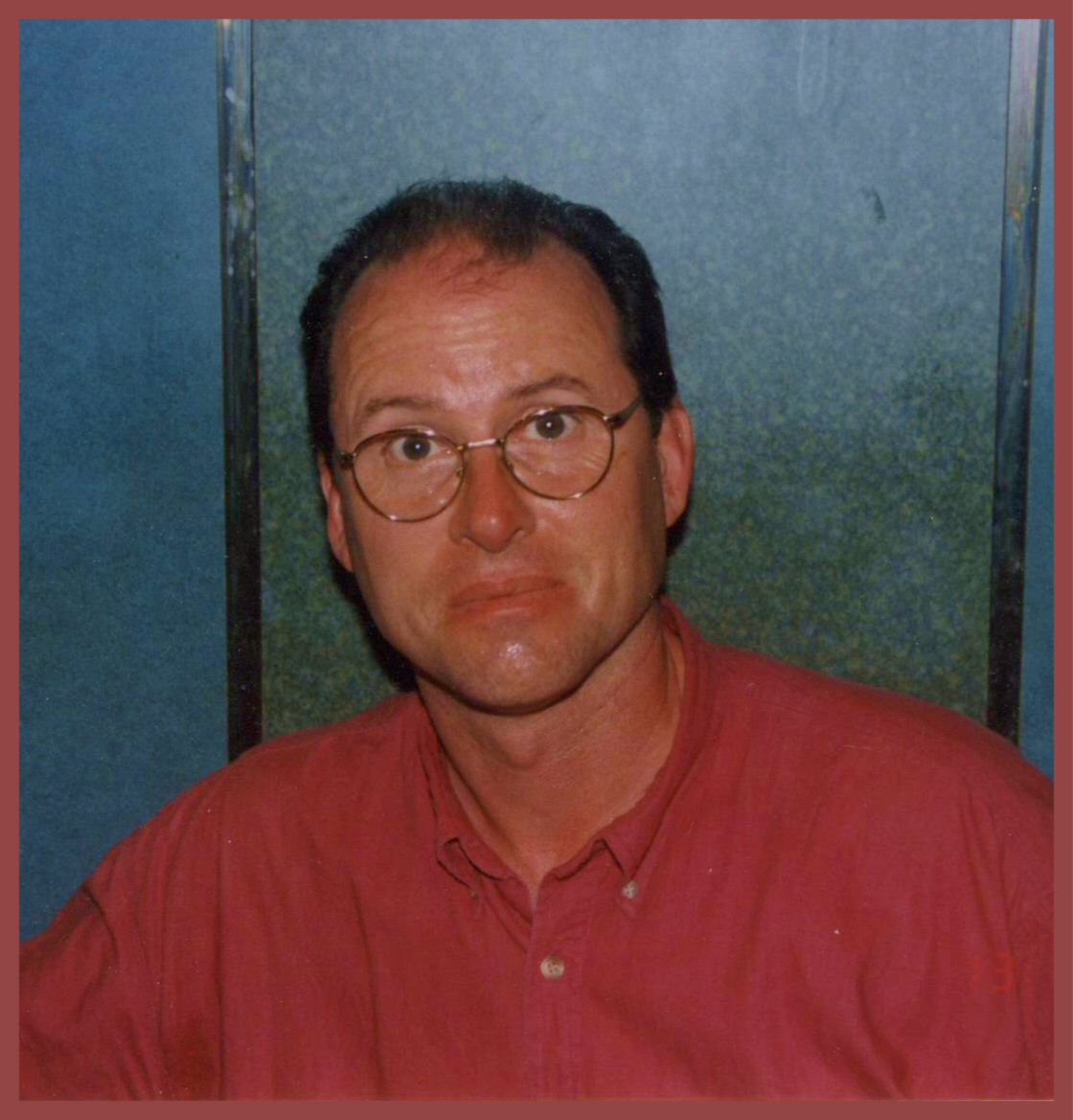
Bemused in Casablanca (1998)

Richard Ford Jones began writing in the late 1980s, when in his early 30s. During a brief three-month period he produced six novellas and short stories, none intended for publication. He jokingly refers to these as “The Jones Canon.” He did not write anything in a literary vein again for another sixteen years.

His next spurt of creativity was from 2004 to 2008, during which he wrote four humorous genre pastiches for an annual 500-word writing contest in The North Bay Bohemian. The contests involved either building a story on an introduction (with plot elements provided by the judges) or utilizing a list of words in the body of a story.

While Jones has had no literary output for extended periods, he has for many years been a self-described “inveterate crank letter writer,” penning scores of letters to the editorial pages of the San Francisco Chronicle and the Santa Rosa Press Democrat, two Northern California newspapers, and now the Reno Gazette Journal, quite a few of which have seen print.

The many authors Jones admires and has read repeatedly include: Michail Bulgakov, Dashiell Hammett, Raymond Chandler, Paul Cain, James M. Cain, Cornell Woolrich, Robert E. Howard, Mark Twain, Daniel Defoe, Sir Arthur Conon Doyle, P.G. Wodehouse, Robert Benchley, James Thurber, S.J. Perelman, St.Clair McKelway, Stendhal (Henri Marie Beyle), Alfred Bester, Luo Guanzhong, George Borrow, Alexander Dumas, Fritz Leiber, Charles Dickens, and William Makepeace Thackeray.”

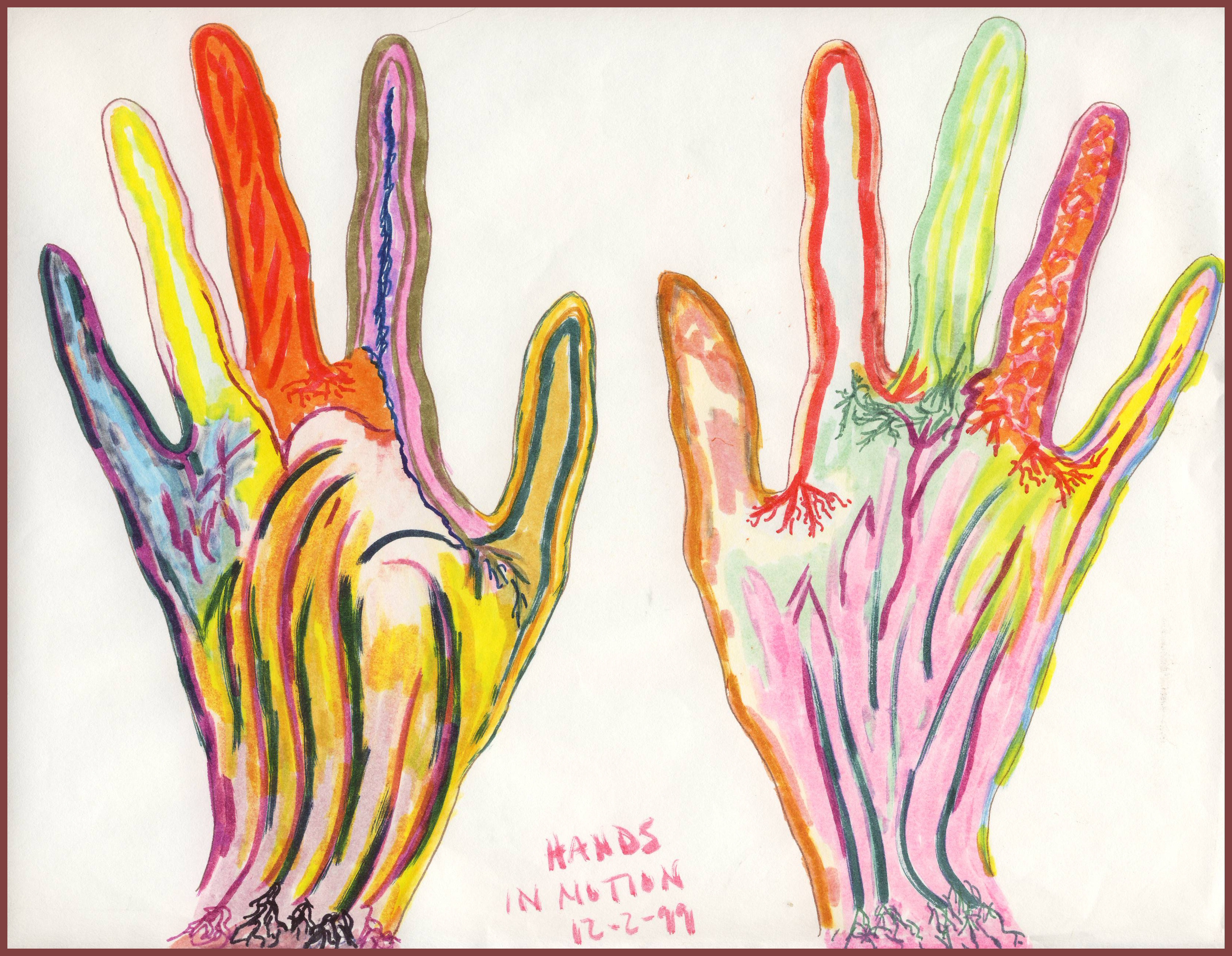
winged hands

My hands; Neruda’s poetry.

your hands

When your hands leap
towards mine, love,
what do they bring me in flight?
Why did they stop
at my lips, so suddenly,
why do I know them,
as if once before,
I have touched them,
as if, before being,
they travelled
my forehead, my waist?
Their smoothness came
winging through time,
over the sea and the smoke,
over the Spring,
and when you laid
your hands on my chest
I knew those wings
of the gold doves,
I knew that clay,
and that colour of grain.
The years of my life
have been roadways of searching,
a climbing of stairs,
a crossing of reefs.
Trains hurled me onwards
waters recalled me,
on the surface of grapes
it seemed that I touched you.
Wood, of a sudden,
made contact with you,
the almond-tree summoned
your hidden smoothness,
until both your hands
closed on my chest,
like a pair of wings
ending their flight.

–Pablo Neruda

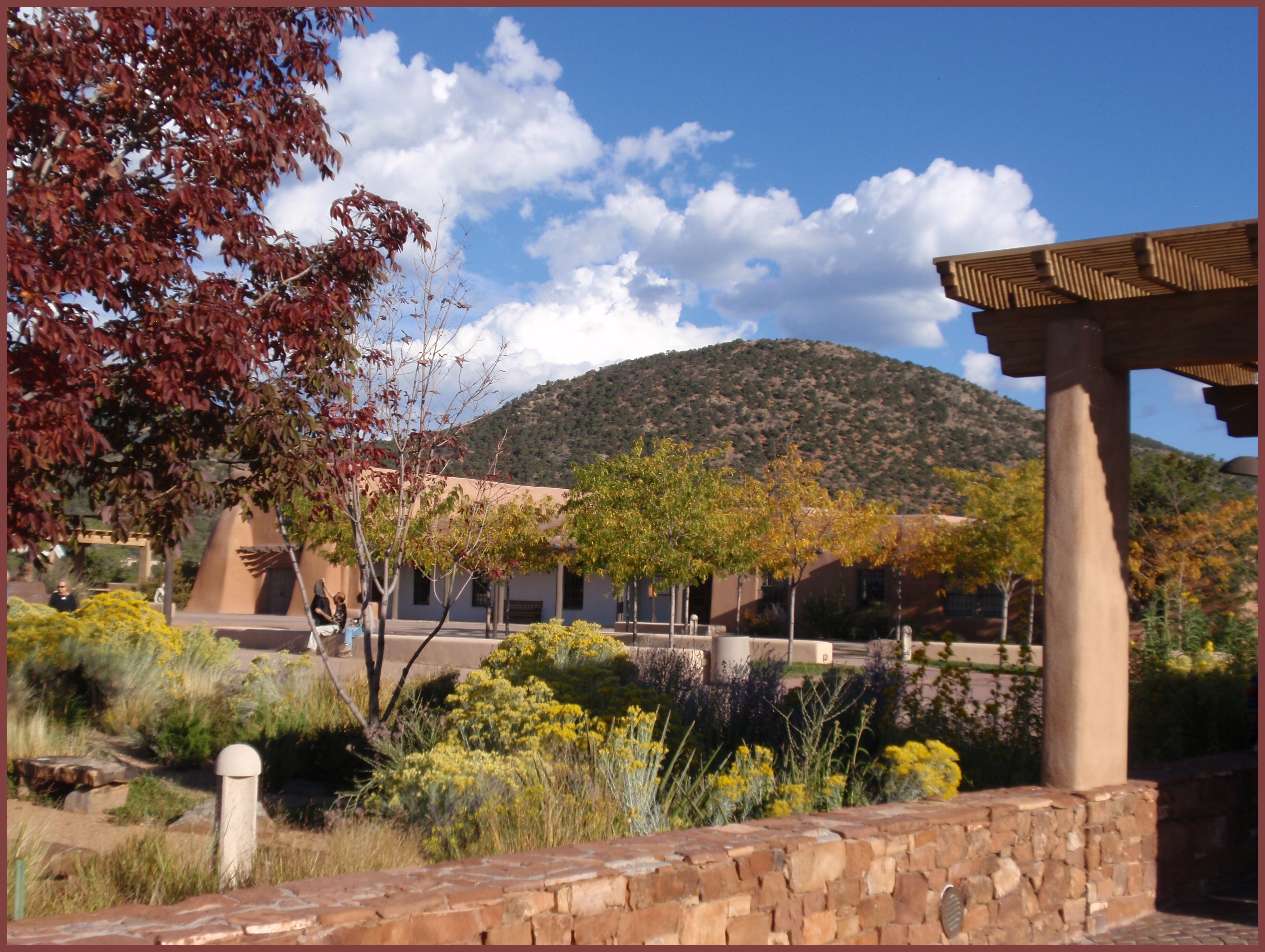
early autumn, Santa Fe style

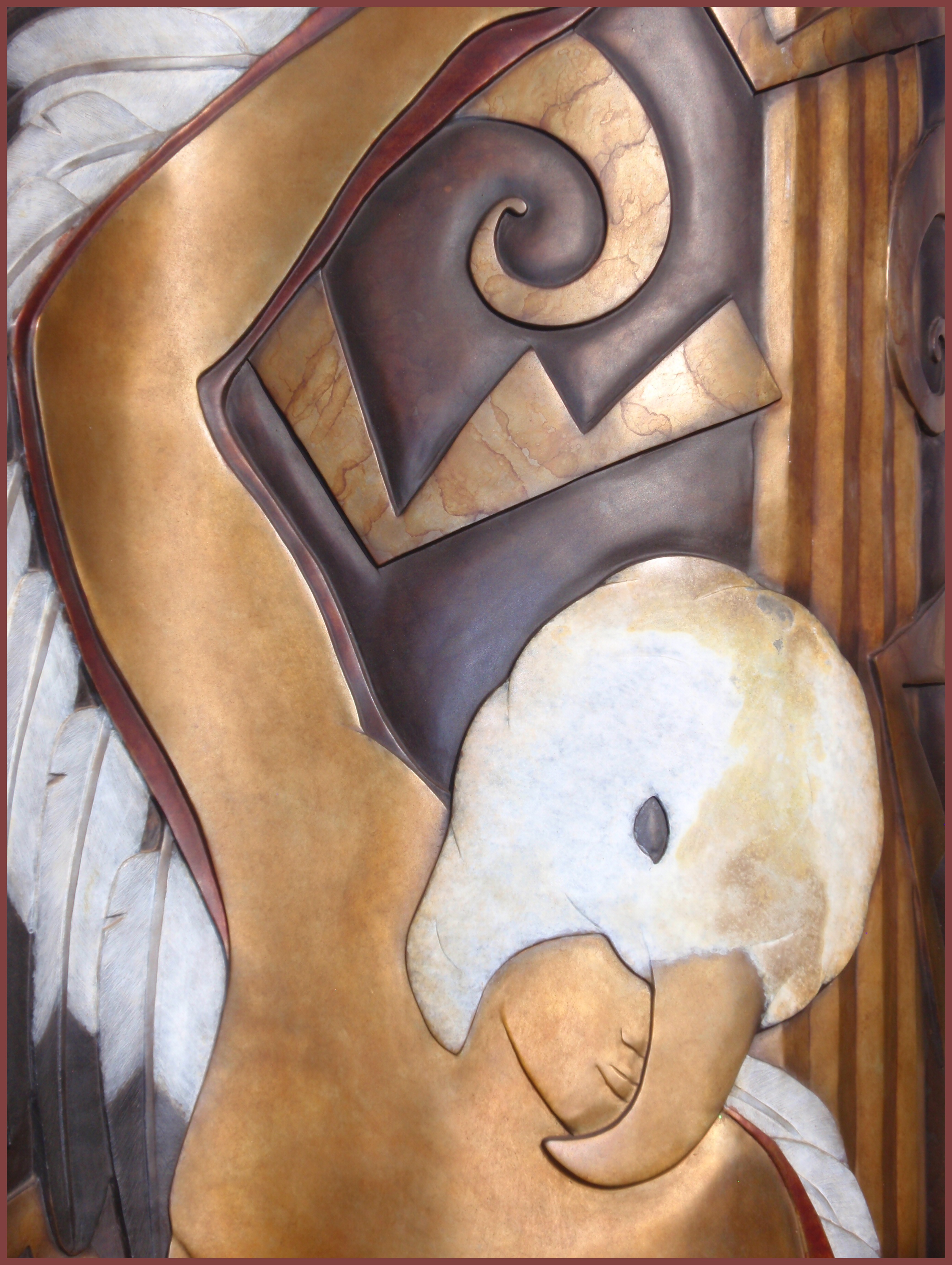
I took these photos on the last day of September 2012 on Museum Hill in Santa Fe. It was my second, but not my last, visit to the Margarete Bagshaw exhibit, “Breaking the Rules,” at the Museum of Indian Arts & Culture. With a title like that, how can I resist? If you don’t know Bagshaw’s work, here’s a link. Seeing some of these pieces up close and personal is truly a revelation. I found out about Margarete Bagshaw from my friend Gayle (thank you!). And I’m doing my best to spread the word. This past weekend, I shared her work with another friend, who was equally amazed and wants to go back to see the exhibit again.

museum hill, Santa Fe NM, 09/30/12

The warm colors and patina of the artwork on the plaza blend perfectly with the colors of this season. I’m really loving autumn this year.

she changes: Janet Echelman’s lacenet

She Changes, 2005 – Porto, Portugal

Janet Echelman spent seven years as an Artist-in-Residence at Harvard. She left Harvard to go to India on a Fulbright lectureship with the intention of giving painting exhibitions around the country.

Although she arrived in Mahabalipuram, a fishing village in India, her paints did not. Without her paints, she needed to find another medium. First she tried working with bronze casters, but that was expensive and unwieldy. Then one night, she notice the fishnet the fishermen were bundling on the beaches, and that sparked her imagination.

She wondered “if nets could be a new approach to sculpture: a way to create volumetric form without heavy, solid material.” The works she’s created are ethereal and stunning, unlike anything I’ve seen before. I really want one!

but what if her paints HAD shown up?

Echelman was probably dismayed, to say the least, that her paints hadn’t made it to India. But she didn’t give up and go home. It didn’t stop her from doing what she’d come to India to do. She took the materials at hand and used them in a way they’d never been used before. Although she didn’t have her paints, she still had her imagination and her creative spirit.

Things hadn’t gone according to her plan. And it was a very good thing they didn’t because if they had, we wouldn’t have these gorgeous lacy sculptures to look at. It’s important to have a plan. But it’s equally important to not be so committed to the specifics of the plan that when things begin to fall apart, you fall apart, too.

she changes

Change. Adapt. Be flexible. Look around you. Create from what’s already there.

More views of the piece She Changes (above) can be seen on Echelman’s website, which also describes the materials used in this and other sculptures and their method of construction.

And you can listen to Echelman–and see slides of her work–in this TED talk called “Taking Imagination Seriously.”

arts & the mind

It’s more than sad and disappointing that so many elementary and secondary schools are decreasing art programs or cutting them out altogether. It’s a cost-saving measure that hurts not only the students, but also society in general. Arts–and creativity–are not add-ons or extras. They aren’t really dispensable.

Humans have been making art, in the form of painting, drawing, and carving, as well as music, since at least 20,000 BC–possibly even since 40,000 BC. Maybe it was engaging in those creative pursuits that contributed to our increased brain size and our unique capacity for learning and transforming the world we found ourselves in. How ironic is it then to get to this point only to collectively turn our backs on art?

your brain on jazz

Charles Limb is a surgeon and jazz musician. In this TED talk, he says:

Artistic creativity is a neurologic product that can be examined using rigorous scientific methods.

So he used fMRI (functional magnetic resonance imaging) on some jazz and rap musicians. Watch and listen to see what he found out.

And the man raps! (He claims it will never happen again.)

the neurological connections

Limb is featured in the recent two-part PBS series Arts & the Mind, hosted by Lisa Kudrow. It’s entertaining, moving, and informative. I highly recommend it. (The link takes you to a page where you can watch both episodes in their entirety.)

EPISODE ONE – Creativity

Arts & the Mind explores the vital role the arts play in human development throughout our lifetimes. Episode One, “Creativity,” features stories and the latest scientific research from experts around the country illuminating how the arts are critical in developing healthy young minds and maintaining them as we age. Showcases innovative arts education programs OrchKids in Baltimore and Get Lit in Los Angeles.

EPISODE TWO – The Art of Connection

This episode illuminates how art is the brain’s lifeline to empathy, emotion, mental agility and healing. Features stories and experts’ insights on: the positive effects of the arts for: children in hospitals; veterans suffering from Post-Traumatic Stress Disorder; building community in Appalachia; and warding off dementia.

final words

Science has to catch up to art.

–Charles Limb

life or fiction?

Which do you choose? The question is asked by Clay Hammond, one of the characters in the movie The Words. In this story, itself a story-within-a-story-within-a-story, Hammond, played by Dennis Quaid, is the author of a novel about another author, Rory Jenson. Jenson, played by Bradley Cooper, is a struggling writer who, after a trip to Paris with his wife, accidentally comes across the find of his life: an unpublished manuscript, the quality of which far surpasses that of his own multiply rejected efforts.

At a low point in his attempt to get his writing career off the ground, Jenson decides to type the entire manuscript into his computer, just so he can feel the words and experience what it might have been like to write something that good. He has no ulterior motive in doing so. This might not seem believable to everyone in the audience, but writing out or typing passages from the works of great writers is an exercise often recommended to aspiring ones.

After some prodding from his wife, however, Jenson agrees to submit the book to a publisher who naturally falls in love with it. The book is published to great acclaim, and Jenson receives several prestigious awards. As time passes and he’s able to get one or two other novels published, Jenson begins to forget that he didn’t actually write that first book. That’s when the true author of the manuscript, referred to in Hammond’s book as “the old man,” shows up and tells Jensen his story, the story the novel is based on. The old man is played by a grizzled, down-and-out Jeremy Irons.

So Jenson faces a conundrum: what to do now? He wants to make things right, but will he?

a loose weave

There’s a lot to try to tie together here to make everything work and make sense—on the one hand—while sustaining an element of mystery on the other. But the screenwriters either didn’t have or didn’t take enough time to do a seamless job of it. [David Mitchell tackles a much more complex interweaving of multiple storylines in his 500+ page novel The Cloud Atlas. Can’t wait to see the movie version, which will be out later this year. ] As a result, The Words has a few gaps, some of which I was dimly aware of as I watched the movie; others opened up the day after. They weren’t enough to turn me against the movie, but the screenwriters could easily have fixed them. So why didn’t they?

The collective gaps were minor compared to my main problem with the movie, which is the casting of Jeremy Irons in the role of “the old man.” His acting was impeccable, but he wasn’t remotely believable as the aging version of his younger self, a role well-acted by Ben Barnes. Irons bothered me so much that I couldn’t suspend disbelief during any of his scenes. My movie-going companion had the same complaint, but it didn’t bother her to the extent it did me.

The women in The Words all necessarily played supporting roles. I thought the best of the three was Nora Arnezeder as Celia, the young Parisian wife.

Nora Arnezeder & Ben Barnes

On the plus side, it was gratifying to see a writer portrayed so accurately onscreen. That doesn’t always happen in movies about writers or writing. While there are plenty of movies about writers, there are not as many about the process of writing a particular book. Some I’ve enjoyed are Finding Neverland, Capote, and Adaptation. My all-time favorite, though, is Stranger than Fiction, which is in my permanent collection. [Stranger boasts a righteously eclectic cast: Will Ferrell, Emma Thompson, Queen Latifah, Maggie Gyllenhal, and Dustin Hoffman. If you’ve been put off by the majority of Will Ferrell’s movies, give this one a chance. Watch it for the rest of the cast, but I’ll bet Ferrell will surprise you.]

Back to the question: life or fiction? The old man chose life. What did Jenson choose? And what did Clay Hammond choose?

The Words
Brian Klugman and Lee Sternthal, directors and screenwriters
Bradley Cooper, Dennis Quaid, Jeremy Irons, Ben Barnes, Zoe Saldana, Nora Arnezeder, and Olivia Wilde

I give it an A for effort and good intentions, an A- for acting, and a C+ for overall execution.

Have you seen it? What did you think? What are your favorite movies about writers and/or the writing life?

glad tidings

When I lived in Michigan, where I was born and grew up (more or less), autumn always felt like a beginning to me, not a harbinger of the end. Maybe it’s because I was born in autumn, but that was always my favorite time of year. It was a relief from the heat and humidity of the summer, for one thing. I never liked summer all that much.

Then I moved to Northern California where autumn just wasn’t the same. Not that there’s anything wrong with it. It just doesn’t smack you in the senses with smoldering foliage, crisp temperatures, and startlingly blue skies. It’s a subtler thing. Maybe my appreciation for subtlety is lacking.

I lived north of San Francisco for 27 years before discovering the Southwest and unexpectedly falling in love with it. Open skies. Lots of sunny days. Not too much snow in the winter. And hot, dry summers. Oh, my! I’m a convert to summer in the High Desert. But living in New Mexico has done nothing to bring back the sense of expectation I used to feel at this time of year.

enter Dawn

And then something happened. Well, several things happened, but the turning point was getting invited to #JournalChat Live by Dawn Herring. She was kind enough to  feature a post from Nine Paths titled Keywords: The Madeleines of Journal Writing. So many good and interesting ideas were exchanged, but the one that made the strongest impression came from Dawn when she mentioned choosing a keyword for a year to help focus on our goals.

A year seems like a long period of time for me to try to stay focused on a single thing. But I love the concept. So in honor of the autumnal equinox, I’ve decided to choose a keyword for the season. I’d already developed my own list of personal keywords and have been using them in my journal writing. Picking one for autumn was easy. And that keyword is . . . velocity.

We also talked about using meditation, poetry, music, and art along with keywords. Therefore, I’ve chosen a song to go with my keyword. My theme song for autumn is Glad Tidings by Van Morrison.

My running start on autumn 2012 includes getting this blog off the ground. It’s been in the idea stage for too long, and with velocity as my keyword, the time to launch is now.

Don’t it gratify when you see it materialize
Right in front of your eyes
That surprise
La, la, la, la      la, la, la, la     la, la, la, la

Thanks so much for the inspiration, Dawn! I hope I can return the favor sometime.

Does anyone else have a keyword and/or a theme song for autumn? If you do, please share in the comments.

Post Navigation